We use cookies on our website.
Some of them are necessary for the functioning of the site, but you can decide about others.

Jesse Ship is a Toronto-born, Paris-raised, Belgian national and freelance writer with a passion for arts, travel, music and culture. His work has appeared in the Toronto Star, Fodor’s Travel, Flight Centre, Metro, BlogTO, Vice, Exclaim, Antenna, CBC, and many others.
They say there is no bad food in Istanbul, only good and great dishes.
It's a bold claim in a city of more than 15 million people, but one that's difficult to dispute after spending a day exploring the food stalls, cafés and restaurants tucked into the side streets of Istiklal Caddesi.

Stretching 1.4 kilometres across Istanbul's European side, this bustling pedestrian thoroughfare, beloved by both locals and tourists, is more than a shopping destination.
Its surrounding streets reveal an engaging mix of Turkish culinary traditions, centuries-old religious landmarks and remnants of the city's multicultural past.
From freshly baked Black Sea pide to sand-brewed Turkish coffee and grilled lamb intestines, there's plenty to discover. And sometimes, the most interesting discoveries are just a few steps away from the crowds.
Our trip to Istanbul begins with historic rainfall in Toronto before we board Air Transat flight TS 214.
In Istanbul, we settle into Kadıköy, a hip and modern district on the city’s Asian side.
The neighbourhood is filled with boutique hotels, coffee shops, bars and antique stores, all within walking distance.
And of course, cats. You can’t forget to mention street cats.
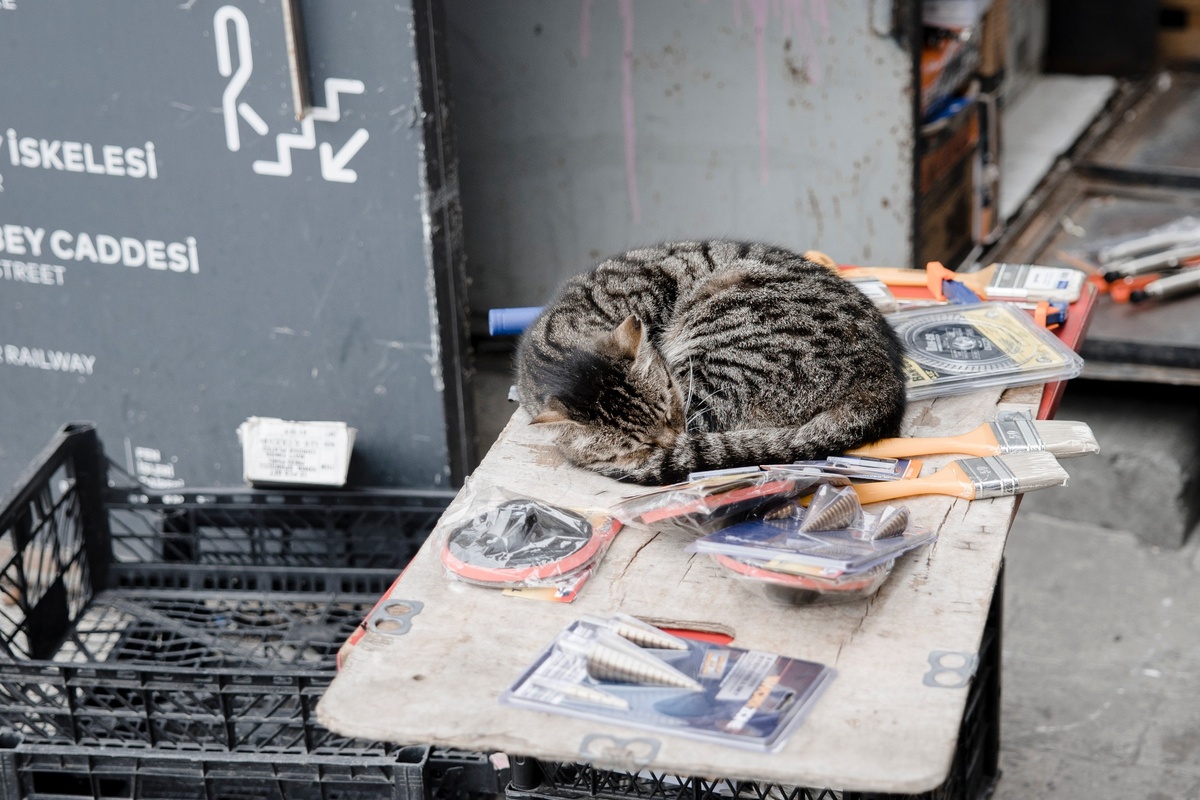
Istanbul has an estimated 300,000 street cats, often fed and cared for by residents.
After settling into Kadıköy, we cross the Bosphorus by public ferry, heading for Istiklal Caddesi.
The contrast between the two sides is part of what makes Istanbul so compelling.
And just like that, we’re in Europe.
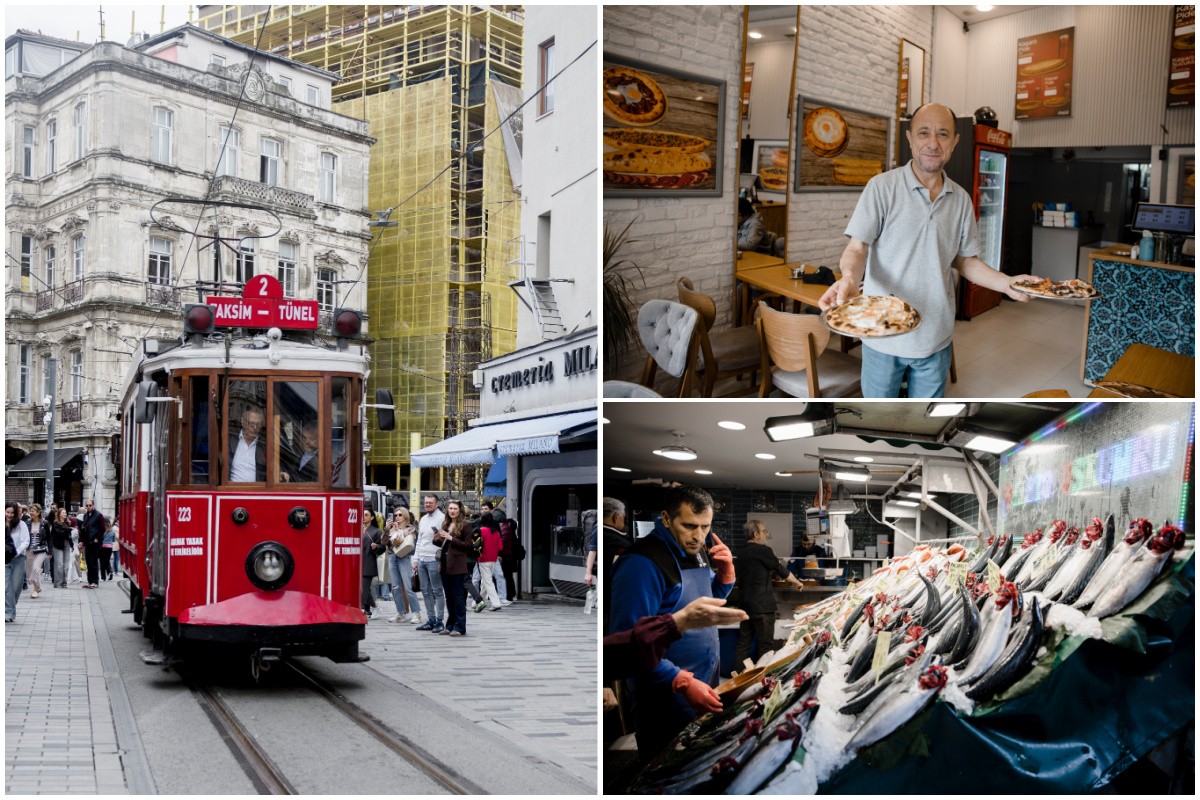
A few steps from Karaköy port, we board the 151-year-old Tünel Taksim funicular, a nearly vertigo-inducing experience, not because of its height (it’s enclosed in a tunnel) but because the waiting platform is on a 45-degree angle.
“Tünel Taksim is the 2nd oldest underground urban railway, and first underground funiculr system, built by the French engineer Eugène-Henri Gavand,” says Ensar, our guide for the day provided by Goway Travel.
“It was used to move animals first because they weren’t sure if it was safe for humans.”
But the journey up to Istiklal is not done yet.
Next, we board another historic vehicle, the Istanbul nostalgic tramway, built in the same era and revived in the 1990s, and arrive at Taksim Square.
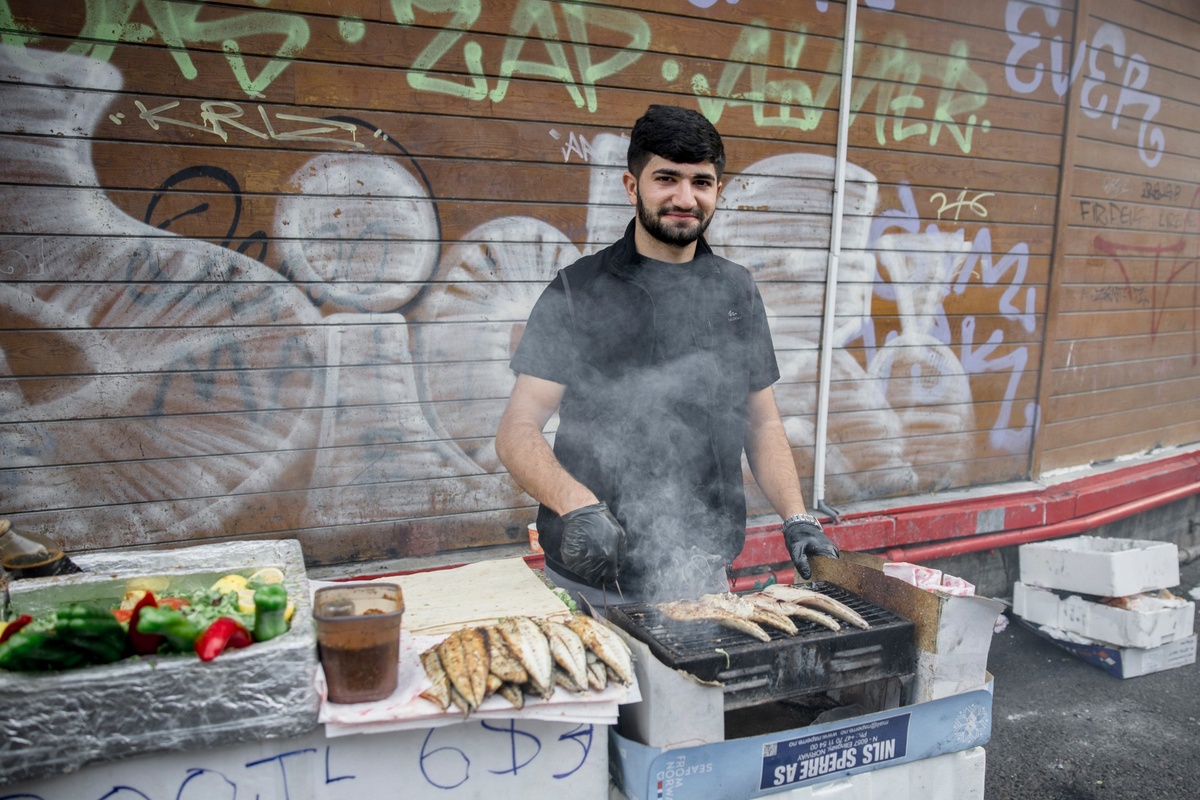
Getting beyond Istanbul’s familiar tourist attractions is easier with someone who knows where to look.
Guides like Ensar are adapting to travellers’ growing preference for smaller, more personalized experiences.
"I'm not guiding big buses anymore. I take small groups, but it's more work," he explains.
"With a big group, I might take them to Topkapi Palace, give them some information and then let them explore on their own. But with two people or a family, I'm with them all the time. It's definitely more demanding. People don't want to be in the crowds anymore."
He sees companies like Goway as part of that shift.
"That's why Goway's approach is great," he says, pointing to the value of repeat customers who return to a trusted travel company for experiences in different countries.
At last, we arrive at our first stop, Çinar Black Sea Pide, a local favourite for the cheesy, buttery flatbread.
Pide looks like pizza, is baked in a wood-fired oven and can come with meaty toppings.
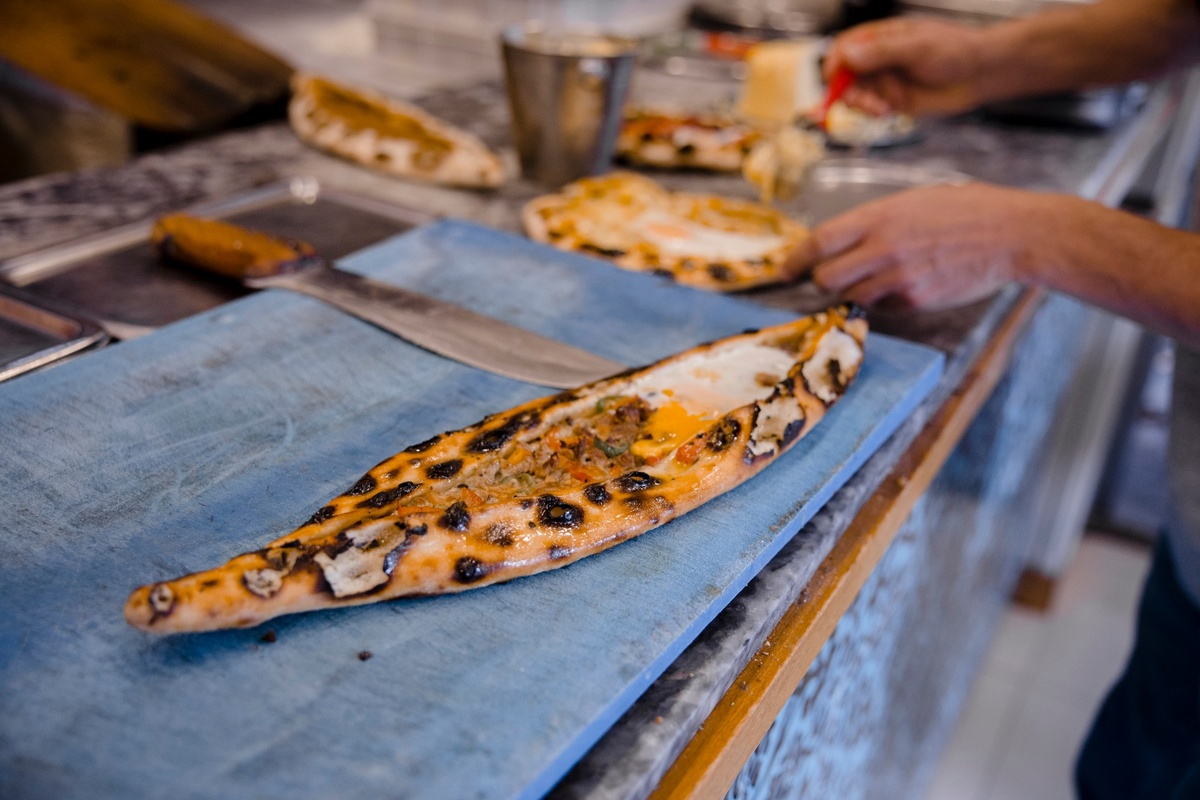
Even the name suggests a connection, but it is definitely not pizza.
Traditional pide is often shaped into a bread boat, and then basted with butter and loaded with cheese before going into the oven with a raw egg is cracked overtop.
Other popular toppings include pastirma (cured beef), sujuk (a spiced sausage) and red peppers (biber in Turkish, no relation to Justin).
The results are hot, gooey, and intensely comforting.
It’s a dish made for sharing, but don’t be surprised if you want to keep it all for yourself.
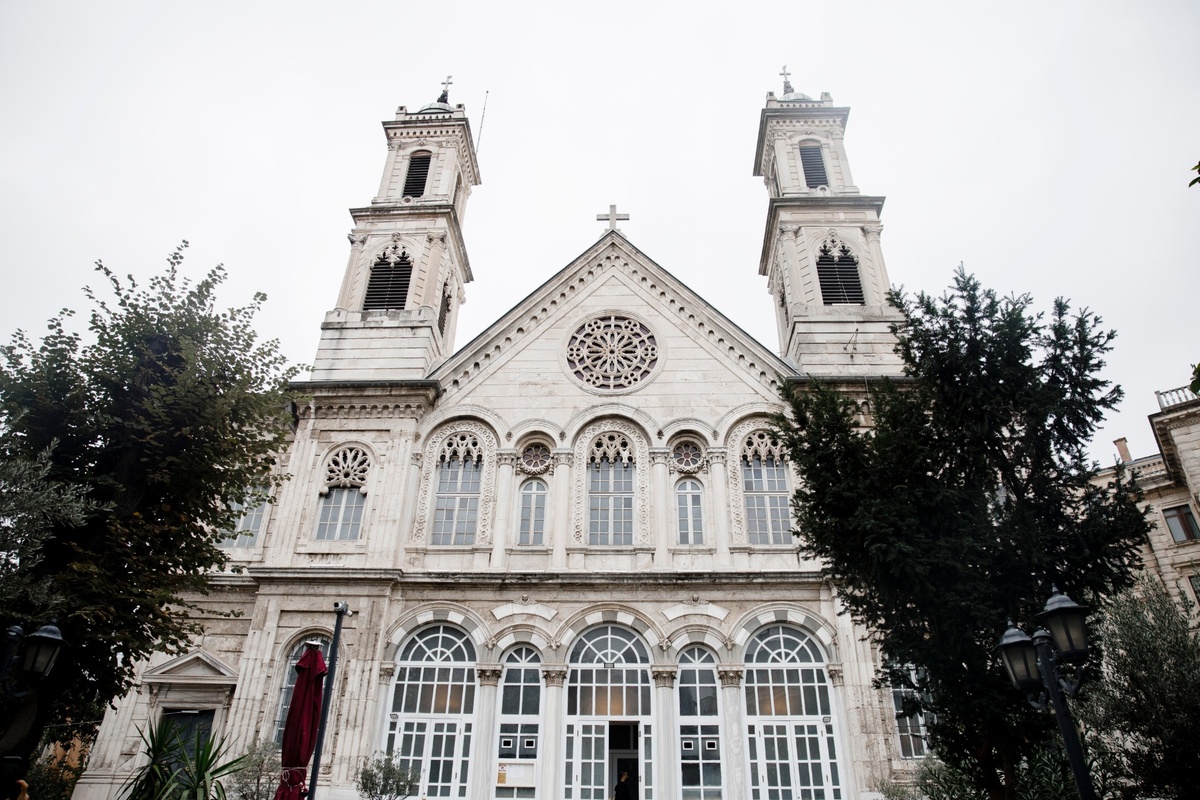
It’s not long before we make our first church stop at the Hagia Triada Greek Orthodox Church, the largest of its kind in the city, and a hidden oasis from the hustle and bustle of Istiklal.
Istanbul’s Christian community is small, and many churches no longer hold regular services.
Hagia Triada, however, remains active.
Even for non-believers, it’s a stunning work of neo-Byzantine art and architecture with angelic ceiling paintings and windowed domes.
“We don’t have that many non-Muslims in Turkey but we still have small Christian groups,” says Ensar.
“Some congregations rotate amongst different churches in the city, depending on the day or the week.”
Up and down Istiklal, it’s common to see street vendors and shops selling craveable snacks, from hot roasted corn and chestnuts, to crunchy simit (the original bagels), loukoum (Turkish delight), baklava, and also chocolate.
According to Ensar, Turkey was the first country to use whole nuts in chocolate, with 85% of the world’s hazelnuts are grown there.
One vendor on Istiklal is a leader in chocolate making process.

Tarihi Beyoğlu Chocolate is a family-run business that’s been in operation since the 1950s.
The tiny street-level shop operates under a strict philosophy, using unbranded foil packages.
No label, no marketing, no delivery, no chains, just rich, high-quality slabs of product with either pistachio or hazelnut, straight from the counter.
It wouldn’t be a trip through Istanbul without a couple stops for tea and coffee, so we stop at the Yeşilçam Café, which pays tribute to Istanbul’s cinematic golden age of the 50s, 60s and 70s.
It’s also one of the fewer places to find authentic sand-brewed Turkish coffee, best sipped slowly and carefully, especially at the end, so as not to end up with a mouthful of grounds.
Grounds are heated in a coffee pot called a cesve in a specialized sand pit and lifted just before they boil over, creating a rich foam.
Coffee is poured into small cups and often served with a glass of water and a tiny piece of Turkish delight.
Turkey is a predominantly Muslim country but it’s also one of the most secular politically.
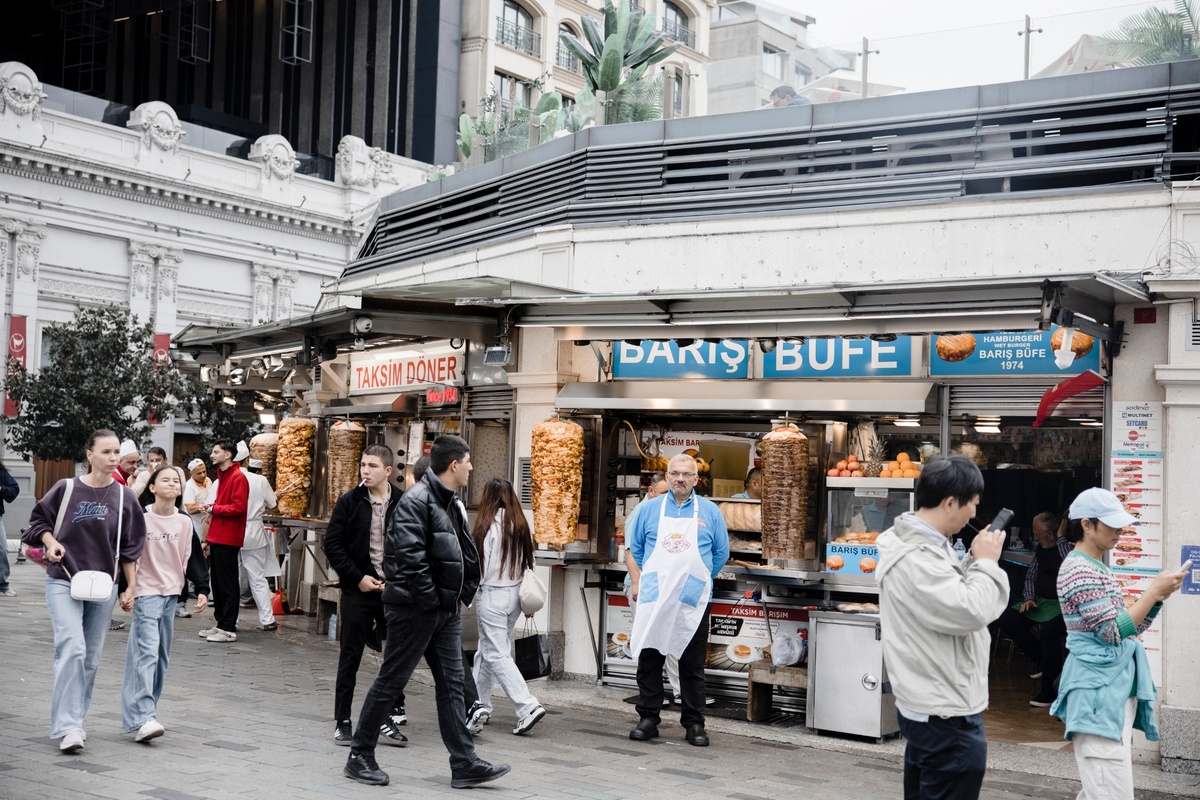
It’s also the birthplace of beer thanks to the Sumerians, which means there’s often an Efes (the national pilsner) available if you’re in the right district, and some kind of meat to go along with it.
Shawarma, kebab, grilled fish wraps or sandwiches, and especially, mussels (midye in Turkish).
Mussels are sold on many a street corner, and the favourite way to serve them is stuffed with buttered rice, like a vine leaf, but between two shells.
Use a third shell to scoop the mixture out.
Fried and battered mussels on a stick are another treat, eaten with a thick pink garlicky walnut Tarator sauce.
While kebab, and other forms of grilled meat on a stick, are common around the world, kokoreç, skewered and grilled lamb intestine, is fairly unique to the region.
“Milk-raised sheep or lamb intestines are used specifically because they taste ‘clean’ compared to grass-fed animals,” Ensar tells us.

They’re wrapped tightly around a core of fat, and when ordered, finely chopped, seared and seasoned on a griddle and piled into a crusty bun.
When not washed down with a beer, ayran (a salted yogurt drink) or şalgam, an oddly addictive fermented pickled carrot and turnip brine, make great accompaniments.
Perhaps that's the real appeal of exploring Istiklal Caddesi.
Beyond the crowds, the historic tram and the familiar storefronts, there's a different Istanbul waiting in almost every side street.
One minute you're eating a centuries-old regional dish, the next you're stepping into a stunning church or sipping coffee prepared over hot sand.
In a city as layered as Istanbul, it's worth slowing down and taking the occasional detour.
Don't miss a single travel story: subscribe to PAX today! Click here to follow PAX on Facebook.