We use cookies on our website.
Some of them are necessary for the functioning of the site, but you can decide about others.


Michael Pihach is an award-winning journalist with a keen interest in digital storytelling. In addition to PAX, Michael has also written for CBC Life, Ryerson University Magazine, IN Magazine, and DailyXtra.ca. Michael joins PAX after years of working at popular Canadian television shows, such as Steven and Chris, The Goods and The Marilyn Denis Show.
The regulations over how travel is sold in Ontario may soon be getting an overhaul as the Ontario Government begins to release reports evaluating Ontario’s travel industry laws.
Last year, Ontario’s Ministry of Government and Consumer Services announced that it would begin a comprehensive review of the rules that govern Ontario travel industry professionals.
The move would aim to modernize the Travel Industry Act, 2002 and Ontario Regulation 26/05 to reflect today’s business landscape, as well as identify new parameters for reducing the financial burden experienced by small businesses.
“The travel industry has been completely disrupted and transformed,” Richard Smart, president and CEO of the Travel Industry Council of Ontario (TICO), told PAX in a phone interview yesterday (June 21), one day after the corporation held their annual general meeting (AGM) at the Mississauga Living Arts Centre in Mississauga, ON.
The AGM was held to update registrants on TICO’s latest initiatives – the boldest one being the corporation’s role in assisting the government in updating its regulation policies.
“There are so many new business models around how travel is sold,” Smart said. “You have home-based agents and agencies, independent contractors, sales reps…the internet. The delivery model that exits today has changed dramatically compared to 20 years ago when you had your bricks and mortar local travel agency.”
The current version of the Travel Industry Act, 2002 and Ontario Regulation 26/05 fails to address the challenges faced by today’s ever-evolving travel industry, and as such, has led to an increase in fraudulent activity, Smart said.
“Individuals and operators are finding it easier to commit fraud at the grassroots level,” he said.
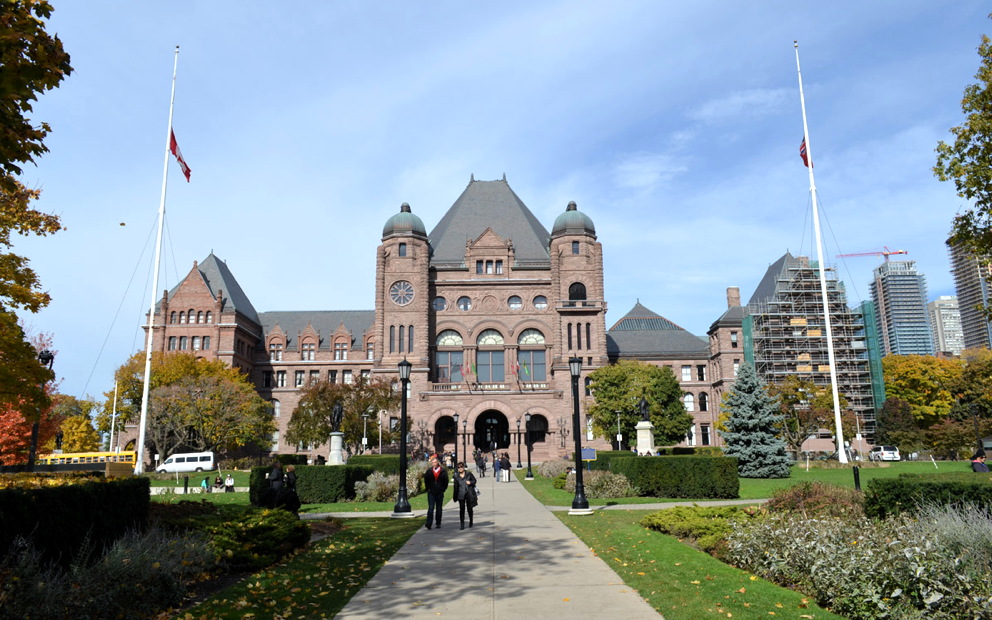 Ontario’s Ministry of Government and Consumer Services is currently reviewing the Travel Industry Act, 2002 and Ontario Regulation 26/05.
TICO, a self-managed, not-for-profit corporation founded in 1997, has entered its 20th year as the official administrator and regulator of Ontario’s travel industry. The regulatory body was created to enhance professionalism and increase consumer protection.
The corporation applauds the Ontario government’s review of the Travel Industry Act, 2002 and Ontario Regulation 26/05, which has so far resulted in a Phase One report, issued last February.
Phase Two of the report will be out “any day now,” Smart said. “Before the end of the month.”
That report will include the government’s first set of recommendations around modernizing the Act, stemming from data obtained through consultations the government had with consumers and TICO registrants over the past year.
“They consulted with everybody,” Smart said.
TICO, too, consulted with its registrants at travel trade shows and conferences this past year and submitted a report of their own to the government last April, Smart said.
“A lot of registrants said [changes to the Act] are long overdue,” Smart told PAX. “Many have said the cost of compliance is way too high and we need to do something about it.”
TICO is wholly financed by registration fees paid by Ontario travel agencies and travel wholesalers. Registrants are also responsible for paying into The Travel Industry Compensation Fund based on their sales.
The Travel Industry Compensation Fund is designed to protect consumers, reimbursing them if they pay a registered travel agent for services they do not receive.
Although an essential part of TICO’s mandate to regulate the travel industry, the fund, too, is up for review, Smart told PAX.
“Registrants are saying the burden for the compensation fund should be spread across more constituents,” Smart said, noting that consumers, nor airlines, hotels or cruise lines, do not pay into the fund.
According to Smart, one in three consumers are aware of TICO’s role and believe the Travel Industry Compensation Fund is a necessary tool when buying travel services.
While TICO registrants “aren’t looking for a free ride,” Smart said, many feel the current model is unfair as the only players who benefit are consumers – an issue Smart expects to see addressed in the government’s next report.
“I’m expecting to see language in the proposal that will identify the need for a consumer-registrant, co-funded model,” Smart told PAX, noting that it’s ultimately the Ontario government that creates and amends the ACT, not TICO.
As for expecting airlines and cruise lines to pay into the fund, Smart noted that those industries – which operate on a federal and global level – are beyond TICO’s control.
“Our ability to have jurisdiction over an airline or cruise line is not practical,” said Smart.
In attendance at TICO’s AGM last Tuesday was MPP Tracy MacCharles, Ontario’s Minister of Government and Consumer Services and Minister Responsible for Accessibility, who applauded the work TICO has done in its 20 years of operation.
TICO updated AGM attendees on some of its successes over the past year, which included lobbying for a new rule that requires travel professionals to display all-in package prices – a “what you see is what you pay” policy – when advertising products, Smart said.
That rule took effect January 1st this year.
The AGM acknowledged TICO's election results: TICO’s Board of Directors named Richard Vanderlubbe as vice chair of the Board; the Board of Directors welcomed Marc Patry, director of CNH Tours in Ottawa, ON to the Board, as well as Jim Diebel, President of Hanover Holidays in Hanover, ON to the Board as the OMCA representative.
The corporation also outlined an updated mission statement, reviewed its consumer campaigns, and acknowledged its initiatives in corporate responsibility, which recently included a $5,150 donation, raised by TICO employees, to Planned Canada, an organization that support social justice for children.
“It was a successful financial year,” Smart told PAX, summarizing the AGM. “We’re on budget and in accordance with our business plan.”
For more on TICO, go to tico.ca.