We use cookies on our website.
Some of them are necessary for the functioning of the site, but you can decide about others.

The COVID-19 pandemic has sparked a parallel pandemic of misinformation and dangerous rumours.
This has taken the form of conspiracy theories and wacky explanations of the origins of the virus, how it can be cured, and who to blame for its spread.
Some examples:
Other theories go so far as to deny the very existence of the virus!
The World Health Organization (WHO) has created a word - infodemic - to denote the wave of false or misleading information linked to the pandemic.
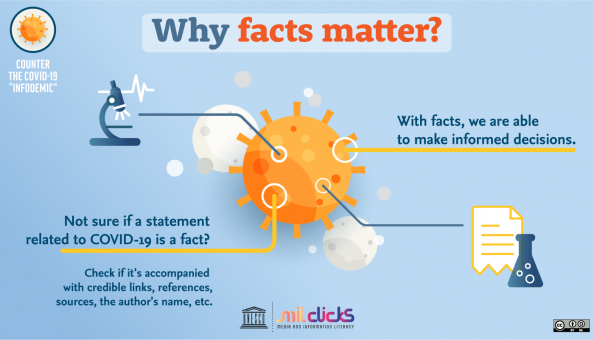
Co-author of the Conspiracy Theory Handbook Stephan Lewandowsky agrees that conspiracy theories can be seen as funny/
But they are no less dangerous, according to him.
“Conspiracy theories have dire consequences for society. This is especially true in the event of a pandemic, as belief in conspiracies can harm or even kill people. It is therefore essential that the public is educated on how to spot conspiracy theories so that they can be ignored," he says.
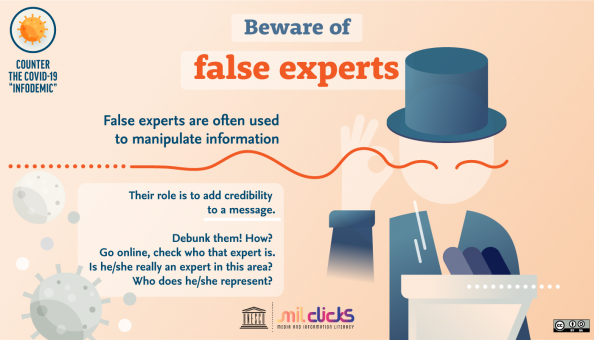
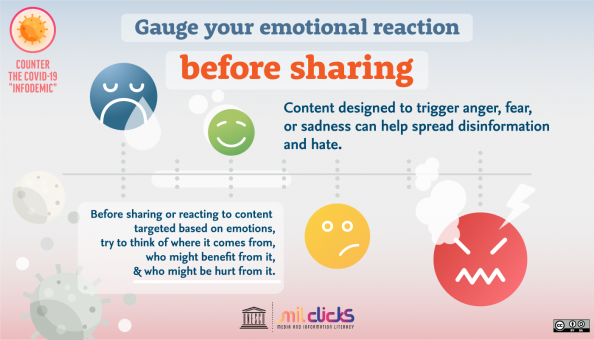
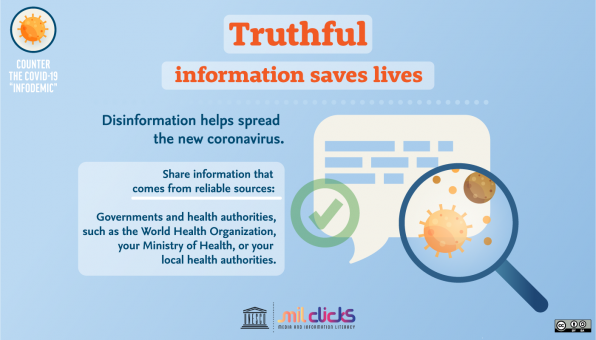
Considering that conspiracy theories undermine science, facts and trust in institutions, and pose an immediate threat to individuals and communities, UNESCO has launched a series of visual learning resources (as seen above), in cooperation with the European Commission, Twitter and the World Jewish Congress.
Easily accessible and comprehensive, these resources challenge conspiratorial theories with critical thinking and empathy. They explain how to recognize these theories; how to understand their motivations; how to refute them with facts; and how to respond effectively to those who propagate them.
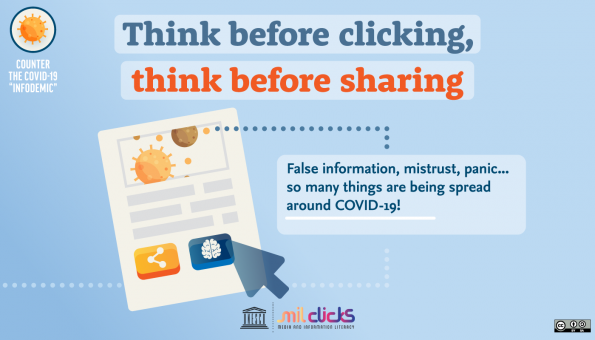
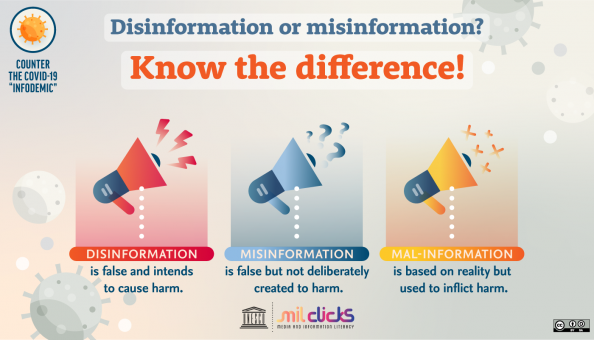
Available in six languages, infographics will be widely distributed on social media using the hashtag #ThinkBeforeYouShare. Infographics are accessible and can be used, downloaded and shared for free!
Don't miss a single travel story: subscribe to PAX today!