We use cookies on our website.
Some of them are necessary for the functioning of the site, but you can decide about others.


Michael Pihach is an award-winning journalist with a keen interest in digital storytelling. In addition to PAX, Michael has also written for CBC Life, Ryerson University Magazine, IN Magazine, and DailyXtra.ca. Michael joins PAX after years of working at popular Canadian television shows, such as Steven and Chris, The Goods and The Marilyn Denis Show.
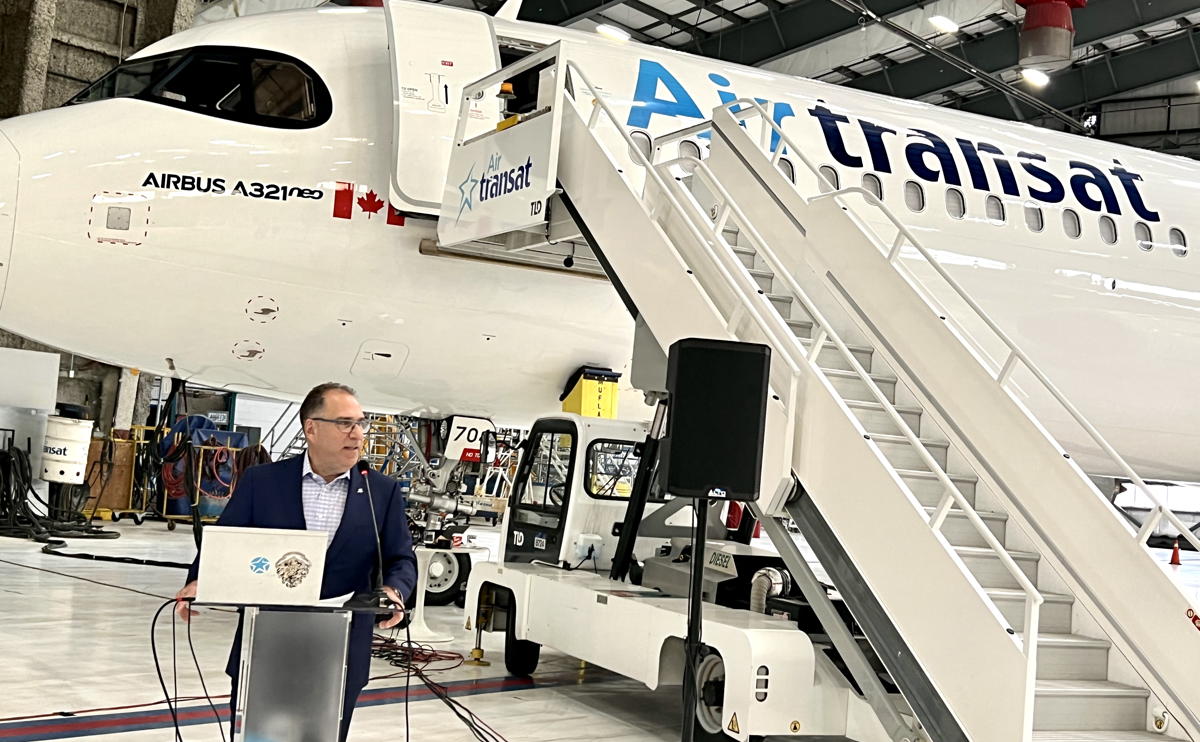
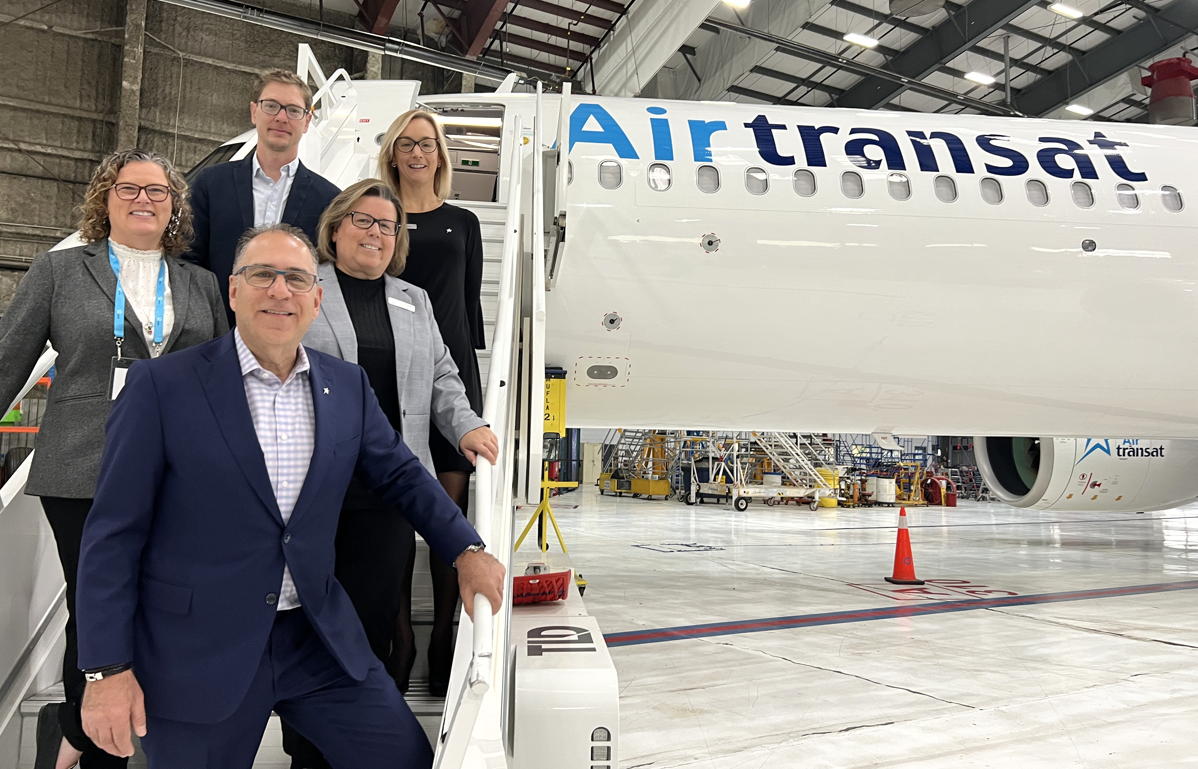
“Our network is changing,” said Joseph Adamo, chief sales and marketing officer at Transat, speaking to PAX at an exclusive event on Wednesday (Oct. 19) at Air Transat’s hangar in Toronto
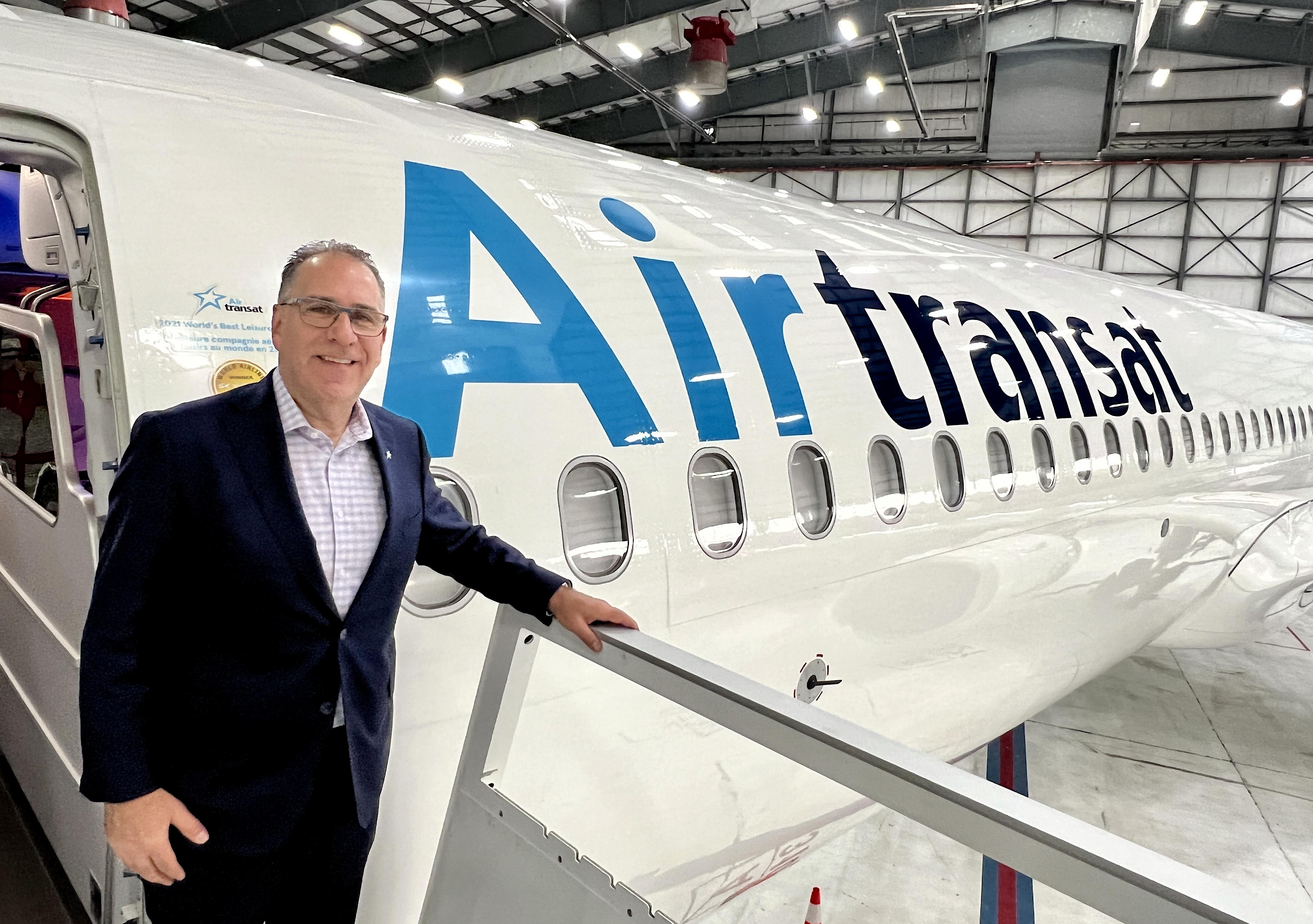
The airline, tour operator and retailer held a VIP reception to not only give partners, travel advisors and media a chance to tour its Airbus A321neoLR – a single-aisle, fuel-efficient aircraft that entered service in 2020 – but to also share key corporate updates.
Transat, for one, plans to “beef up” its domestic and transborder service, both in Toronto and Montreal, so it can further carry passengers to Europe, “which is one of our strengths.” Mr. Adamo told PAX.
VIDEO: Air Transat showcases Airbus A321neoLR at VIP event in Toronto
Supporting this mission are new codeshares agreements – one with WestJet, which Air Transat launched last spring, and a deal with Porter Airlines, which took off on Tuesday (Oct. 18).
“This is potentially quite game-changing for us,” Adamo said, referring to the Porter codeshare, an agreement that is activated between Porter flights to and from Halifax (YHZ) and Toronto City (YTZ), and select Air Transat flights to and from Montreal (YUL).
“We’ll be able to bring passengers over to Paris, London, Lisbon, as well as to sun markets, and eventually to U.S. markets in the coming weeks,” Adamo said.
READ MORE: Air Transat & Porter Airlines launch codeshare agreement
When Porter activates its jet program (which will dramatically expand its North American network), Air Transat will partner up with them on flights into Pearson and Montreal “and do the same thing,” Adamo said.
“That’s important,” he said. “It allows the two of us to grow and play off of each other’s strengths.”

Nicole Bursey, commercial director at Transat, said it’s an “exciting time” at Transat as the company builds new codeshares with other airlines.
“We can increase our footprint without having to use more of our own aircraft,” Bursey noted.
While the COVID-19 pandemic has rattled travel for more than two and half years now, Adamo pegs Transat’s brush with uncertainty at three and half years due to the Air Canada merger that was approved in 2019 and then scrapped in April 2021.
“I’m here to tell you that we’re still here,” Adamo said yesterday, thanking partners for their support. “We’re still standing. We got through it.”
But Transat, following a period of restructuring, is also now a smaller organization.
Adamo, who is also president of retail network Transat Distribution Canada (TDC), said Transat's workforce was “a full 4,300 strong” as of late August, “and growing."
But that's less than the 5,000 workers that were employed pre-pandemic.
“We likely won't get back to 5,000, but that’s a good thing,” Adamo said, referring to the efficiencies that come with downsizing.
Transat is also in a different financial position these days.
“We went into the pandemic with loads of cash…in excess of half a billion dollars with exactly zero debt,” Adamo said. “Today, we’re leveraged to the hilt. We’ve taken on debt.”
To get through the health crisis and border shutdown, Transat obtained additional liquidly through federal channels, which Adamo defined as “loans that are not gifts.”
“It's always interesting when the mainstream media characterizes the assistance that the federal government gave us as a bailout. To me, a bailout sounds like free money. We’ve received no free money. We’re grateful for what we have, but these are interest-bearing loans [and] make for a very different company,” Adamo said.
The situation is what led Transat to abandon its hope of becoming a hotelier – a path it pursued years back.
“We no longer have the balance sheet to finance the construction of hotels. So, we've turned the page on that,” Adamo said.
This year has been about “stabilizing and transforming the organization,” he said, adding that while the team is confident for 2023, it remains cautious.
In 2023, Air Transat will deploy capacity that is “pretty much on par” with what it had in 2019, Adamo said.
But the “new Transat” is primarily focused on Ontario, Quebec and the Maritimes, which will show “an abundant and compelling” offer this winter, Adamo said.
So, where does this leave Western Canada?

Air Transat pulled sun and U.S. flights from western provinces in 2020 in response to the pandemic, a decision that devastated some travel advisors.
Mr. Adamo called it a “difficult choice, but was absolutely the right thing to do” given how much the company downsized due to the pandemic.
“The reality is, we simply could not, and still cannot, operate meaningfully out of Western Canada at the right scale,” Adamo said. “You need to have scale to be efficient, to be profitable.”
Transat has no immediate plans to return to Western Canada, Adamo said. Not until at least 2024 and “not likely beyond that.”
“Who knows? As we rebuild our fleet, we may be able to go back there,” he said.
Air Transat, meanwhile, maintains domestic connections from Montreal and Toronto into Calgary and Vancouver.
“That feeds into our transatlantic program and this is where WestJet and Porter can really fill that gap for us,” Adamo told PAX.
Air Transat’s fleet, thanks to new single-aisle Airbus A321neoLRs, (PAX toured one yesterday – see our onboard video here), is 40 per cent younger than the fleet it operated in 2019.
The airline’s A310s have been retired and it has also let go of some older A330s.
Today, Transat has 12 Airbus A321neoLRs in its all-Airbus fleet and there are plans to add at least another 5 over the next three to four years.
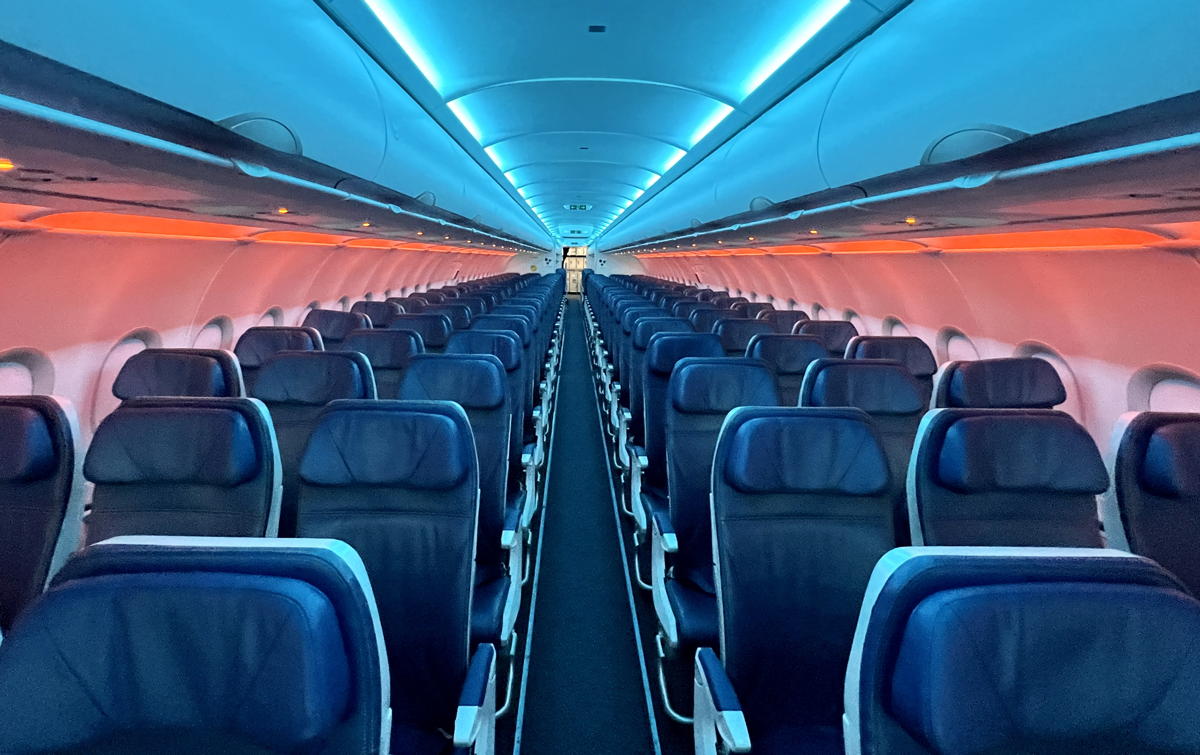
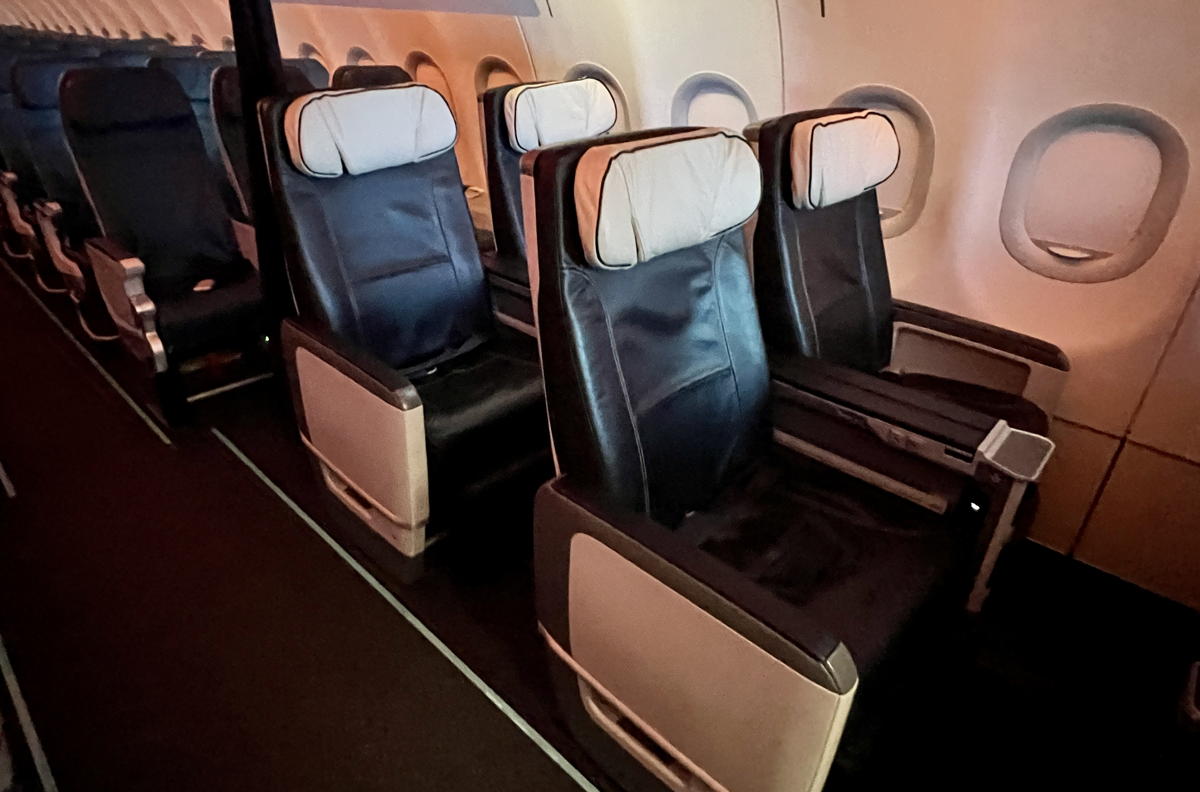
A321neoLRs have 199 seats with both Club and Economy classes.
Club Class seats have an adjustable leg rest and the economy seats are wider than in the A310.
The aircraft has the industry's widest single-aisle cab, allowing easier onboard movement, and the screens in economy are larger and have a USB port.
Air Transat is deploying these planes for Caribbean and transatlantic destinations, such as Spain, France and the United Kingdom.
“It’s a very comfortable and quiet aircraft,” Nicole Bursey noted.
The plane has long-range capabilities, but isn't a wide-body aircraft, which speaks to the “need for us to have the right size of aircraft in every market we’re in,” she said.
“It allows us to go into destinations that can’t support a giant A330 all the time,” said Bursey.
The plane’s size offers flexibility in terms of flight commercialization and frequency while its fuel efficiency keeps cost per seat as low as possible, while reducing its carbon footprint.
“This is the most fuel-efficient aircraft,” Benjamin Pron, commercial director at Air Transat, told PAX.
The aircraft produces 32 per cent less carbon emissions compared to usual aircraft of this type, he said.
Pron added that up to three A321neoXLRs, which offer greater range and fuel capacity, will also soon be introduced.
While yesterday’s mood was positive, Adamo also took time to address Transat’s shortcomings – specifically regarding telephone wait times.
“It is clearly unacceptable,” Adamo said. “There is no argument there…we’ve had a tougher time getting back to appropriate staff levels.”
He stressed that staffing issues in the call centre are not due to “penny pinching.”
“We onboard staff every day in a meaningful way,” he said, noting how Transat is “paying more [for contact centre salaries] than we’ve ever paid.”
The brand has also made major investments to self-serve tools.
“It hasn’t gotten us out of the hole, but it has helped and will pay off dramatically,” Adamo said, stressing that telephone wait times are improving.
Meanwhile, business is picking up…and fast.
The last seven days were Transat’s best booking week for the upcoming winter, Adamo said yesterday.
“And that pace is accelerating week on week,” he said.
The uptick in business comes after Transat, last month, released its 2022-23 winter program, and on the heels of a new brand campaign called “Travel Moves Us.”
And despite talk of an economic slowdown, “Our read is that travel should fare better than most sectors,” Mr. Adamo told PAX.
What are Joe Adamo’s top tips for travel advisors this winter season?
“Be confident,” he told PAX. “The market is there and the proof is in the pudding. [Agents] are extremely busy.”
And secondly: “Dare to be choosy,” he said.
“Be selective on who you serve and what you sell. The fact is, there's a lot of people who want to travel. And unfortunately, there are fewer qualified travel professionals in the market than there were in the past for reasons we all understand.”
“So, you're in a position to provide high-touch service to people who want your service. And you're competing with fewer people who offer that service. Economically, that puts you in a good position to be selective.”
“And make sure you're paid for what you’re worth and the service you render.”
Don't miss a single travel story: subscribe to PAX today! Click here to follow PAX on Facebook.


