We use cookies on our website.
Some of them are necessary for the functioning of the site, but you can decide about others.
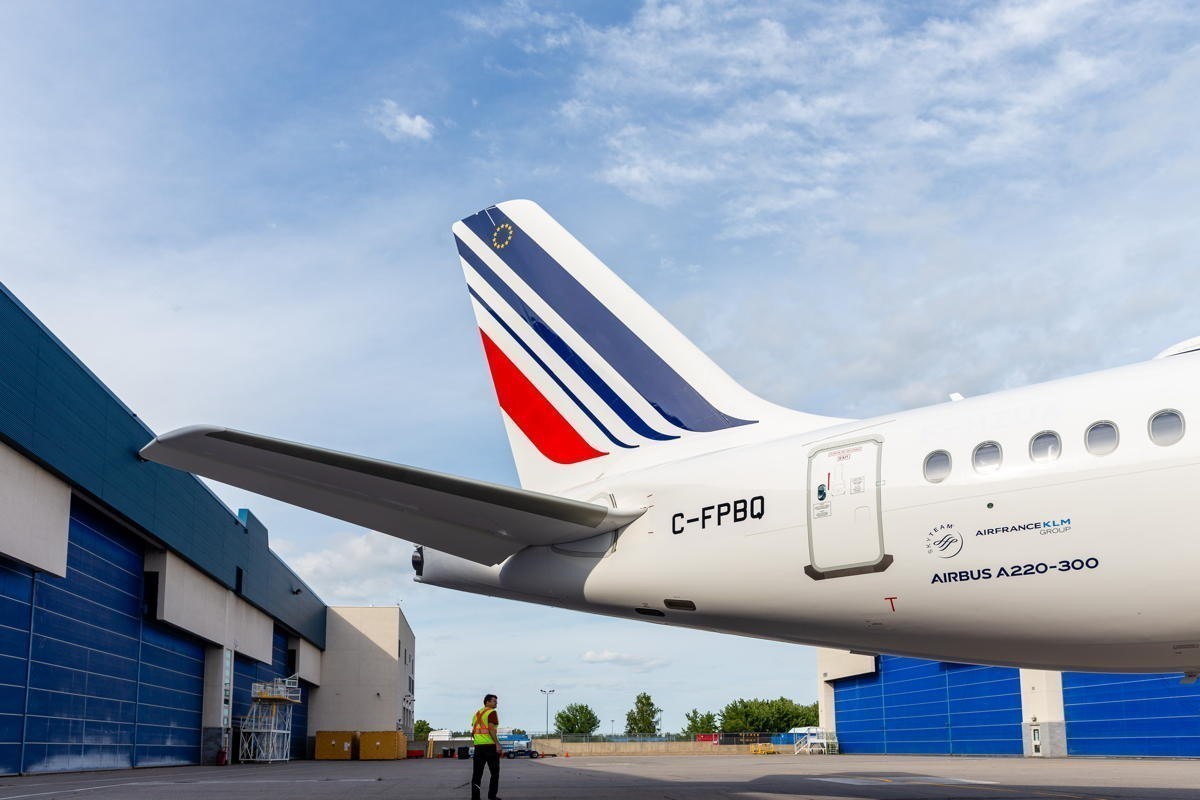
Air France has launched the “Air France ACT” program, which outlines the airline’s new CO2 emissions reduction strategy.
The plan strives to meet the objectives of the Paris Agreement, which aims to limit global warming to below +2°C.
Air France’s strategy is based on three priorities:
“Air France ACT” embodies the transparent, realistic and science-based approach adopted by the company to ensure its environmental transition through concrete and measurable actions.
READ MORE: Air France Group commits to setting science-based CO2 emission reduction targets
“Decarbonizing aviation will be difficult and will take time,” the airline said. “This process relies on close cooperation between the different stakeholders: aircraft manufacturers, engine manufacturers, fuel suppliers, airports, air traffic control, public authorities, research institutes and academia.”
The new decarbonization trajectory targets a 30 per cent reduction in CO2 emissions per passenger/km by 2030 compared to 2019.
This objective excludes so-called “offsetting” actions to consider measures that exclusively reduce direct and indirect emissions.
It corresponds to a 12 per cent reduction in the company's total emissions between 2019 and 2030, in line with expected changes in activity, after a six per cent reduction achieved between 2005 and 2019.
By 2050, Air France aims to achieve net-zero emissions (a drastic reduction in its CO2 emissions coupled with contributions to projects that will remove from the atmosphere a quantity of CO2 equivalent to residual emissions each year)
The company says it is working to “define a precise and verifiable decarbonization trajectory for 2050,” based on a set of hypotheses – notably concerning an evolution of traffic – which may vary.
“This is an evolving process, guided by the ambition to be in line with the scientific benchmarks, as is the case for the trajectory for 2030,” the airline said.
To achieve these goals, Air France is activating all the decarbonization mechanisms it has at its disposal.
Fleet renewal with new-generation aircraft: Airbus A220, Airbus A350 – more fuel-efficient, emitting up to 25 per cent less CO2, and a noise footprint reduced by 33 per cent on average. By 2030, these aircraft will make up 70 per cent of the Air France fleet compared to seven per cent.
Increased use of Sustainable Aviation Fuel (SAF), which will reduce CO2 emissions by 80 per cent on average over the fuel life cycle, and not create competition with food production. By 2030, the company aims to incorporate at least 10 per cent SAF on all its flights, and 63 per cent in 2050.
Eco-piloting techniques: taxiing using only one of the engines whenever possible, optimized flight paths using artificial intelligence, continuous descent in cooperation with the air traffic control authorities, to name but a few. These initiatives reduce CO2 emissions by two to three per cent on average over the year, the airline says.
Introduction of a more responsible catering offer to reduce carbon footprint. On board flights and in the lounges, Air France favours local, seasonal produce whenever possible. The company also offers customers a pre-selection of dishes before the flight in the long-haul Business cabin, as part of its active commitment to reducing food waste. By the end of 2022, Air France will have eliminated 90 per cent of single-use plastics compared to 2018, after having replaced in 2019 plastic cups, cutlery and stirrers with sustainable alternatives.
Developing intermodal transport, to offer low-carbon transport alternatives for short distance journeys, notably within a reinforced partnership between Air France and SNCF.
Watch Air France’s new video campaign below. For more info on “Air France ACT,” click here. airfranceact.airfrance.com.
Don't miss a single travel story: subscribe to PAX today! Click here to follow PAX on Facebook.