We use cookies on our website.
Some of them are necessary for the functioning of the site, but you can decide about others.

Journalist
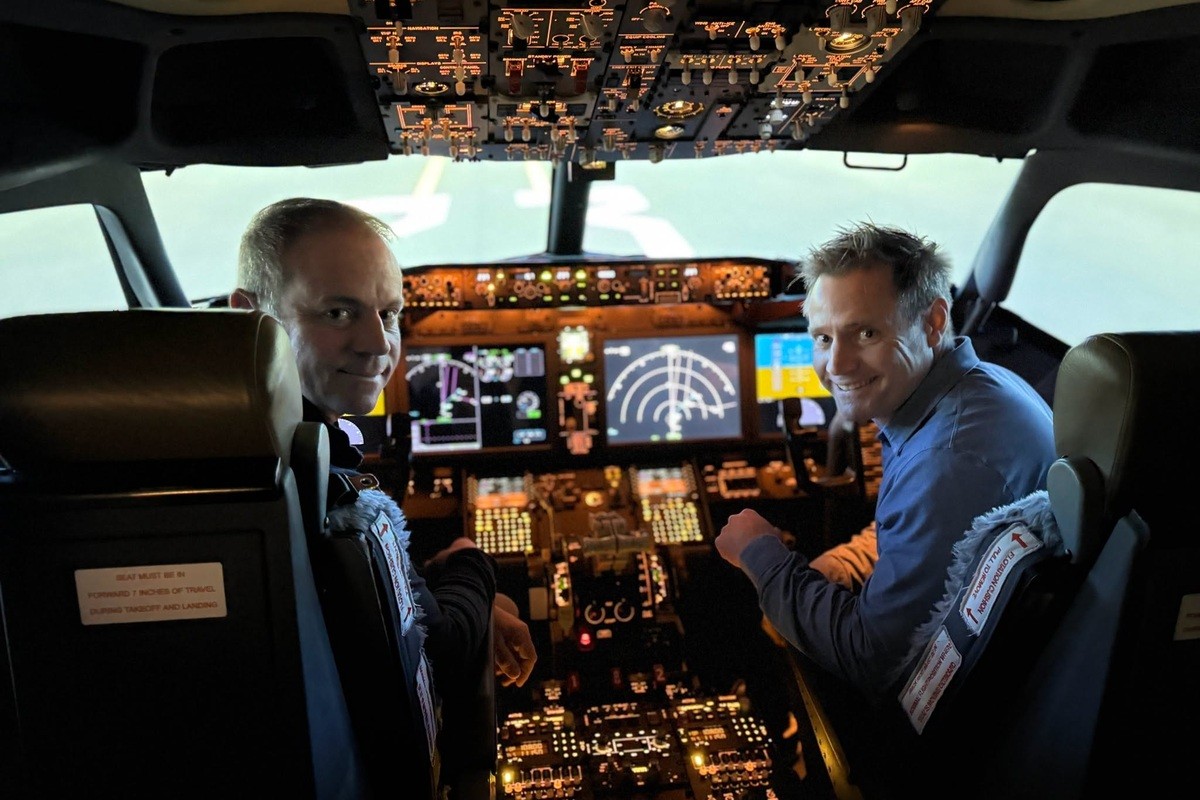
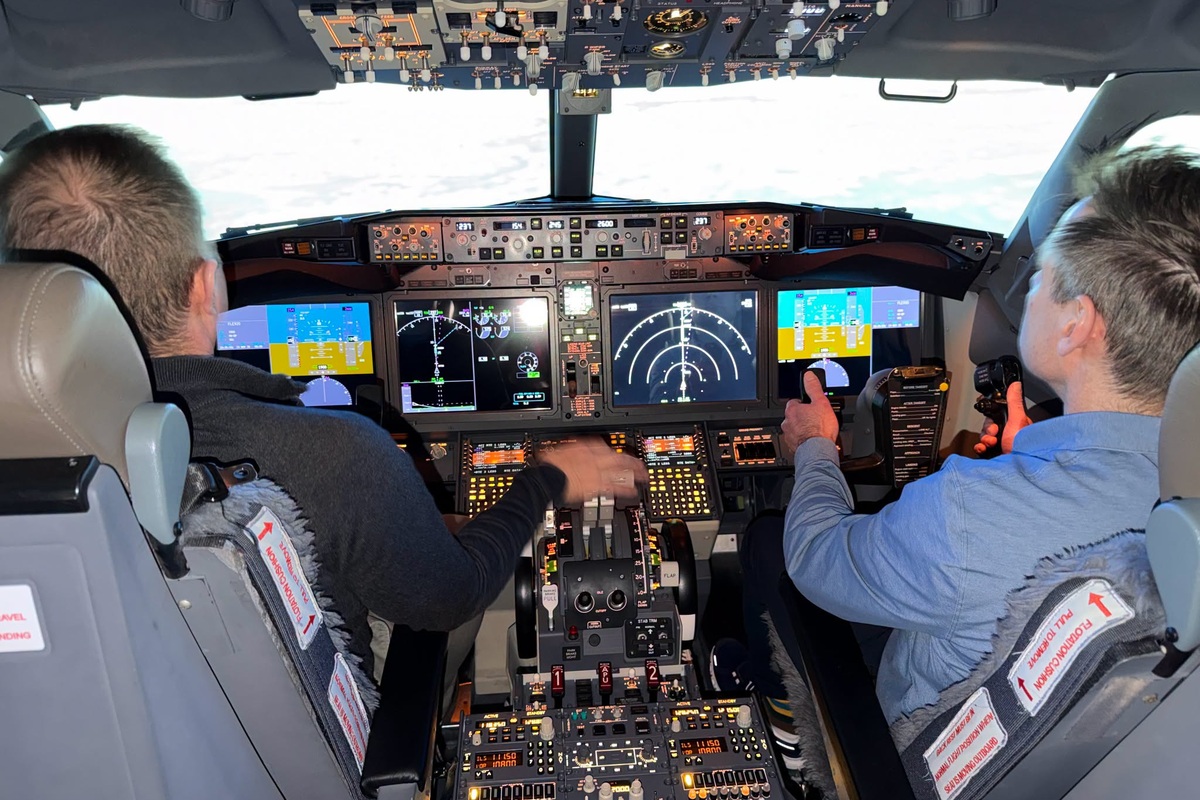
PAX took off from Toronto Pearson, looped over southern Ontario and dipped as low as 1,000 feet before returning for a landing that may or may not have drawn applause.
The entire flight took place in a Boeing 737 cockpit trainer in Mississauga. I knew the cockpit was stationary, but from the pilot’s seat, it felt like we were moving.
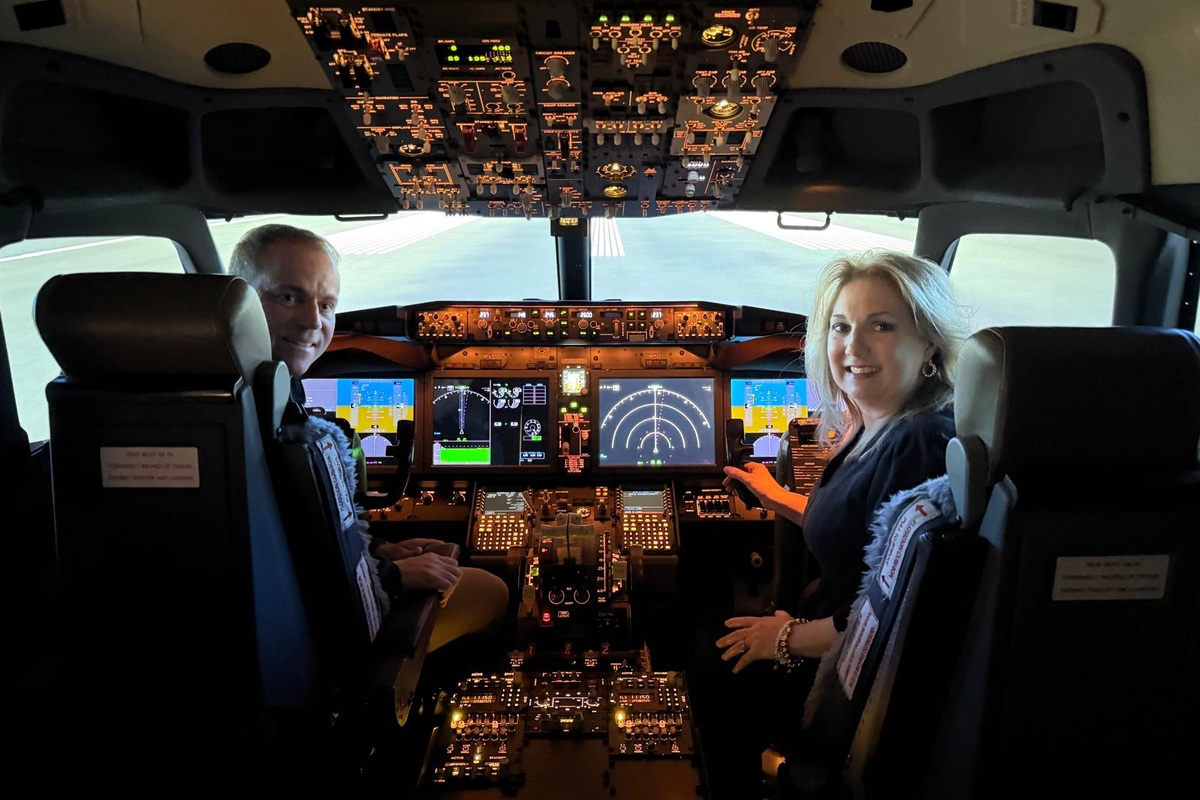
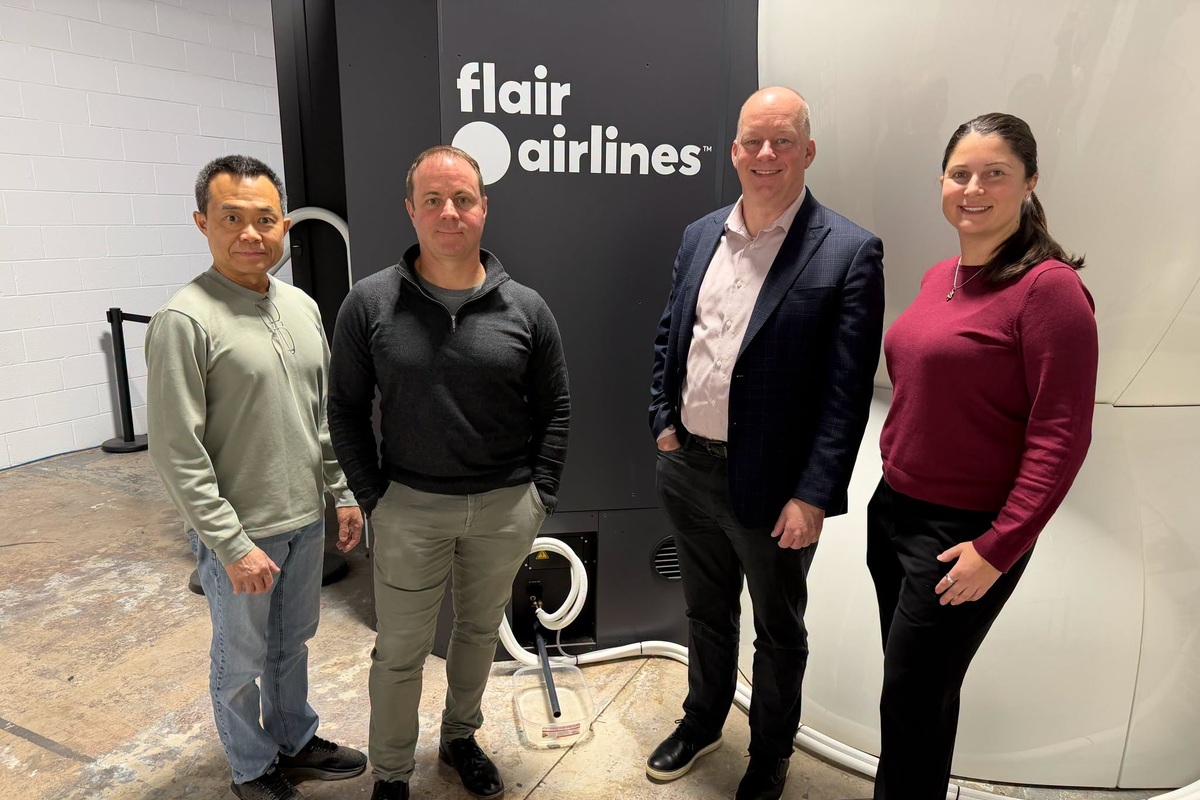
Flair Airlines hosted a hands-on media experience at its Mississauga training centre Tuesday (Nov. 24), giving PAX a look at how its pilots learn the 737 and a turn at the controls.
The airline says it operates Canada’s only flight training device certified at Level 6 by Transport Canada and that the regulator recently recertified it for two years, the longest validation period available.
“This device in particular is all original aircraft parts and it’s all completely to scale,” Paul Leach, Flair’s director of pilot training, said.
Flair describes the device as similar to a full-flight simulator, with a cockpit that stays stationary.
The airline says its visuals are comparable to those of a Level D full-flight simulator and can recreate summer and winter conditions, day and night, and a range of weather.
Pilots start in the fixed-base trainer after ground school, Leach said.
There, they get used to the feel and layout of the controls and rehearse procedures they’ll use in the full-motion simulator and, eventually, in the aircraft.
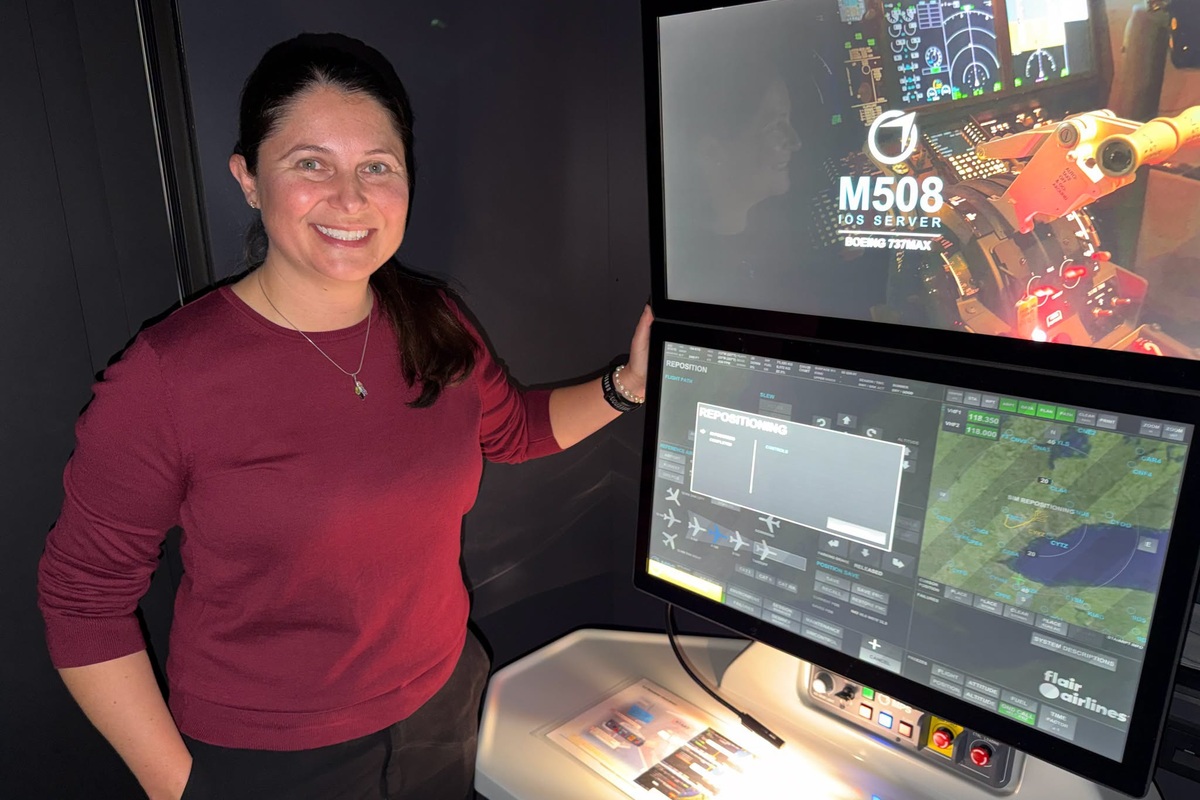
From her seat behind the pilots, Amelia Kerr, Flair’s training program manager, can play the lead flight attendant or air traffic controller.
She can bring in snow or reduce visibility, then watch how the crew responds.
With more experienced pilots, she can sit back and see how they make decisions together.
“We have a script that’s actually written for our session, but anything can be decided up here by a crew,” Kerr said.
Pilots can practise a go-around, in which they break off the approach and climb away from the runway, Kerr said.
She can save the aircraft’s position and configuration before the manoeuvre, then return the crew to the same point so they can fly the approach again and land.
For travel advisors with clients who are nervous about flying, a go-around is one example of what crews rehearse before carrying passengers.
At Flair, instructors can put pilots back at the same point on approach so they can practise the manoeuvre again and get feedback.
“Safety is a given,” Matthew Kunz, Flair’s chief operating officer, said.
Passengers expect to get from A to B safely, he said.
For Flair’s instructors, part of meeting that expectation is giving crews time to practise handling failures, get feedback and try again.
“We can have them try two, three, four times until they essentially get it right and understand what it is they’re trying to achieve,” Kunz said.
Before acquiring the device, Flair used a Level 4 touchscreen trainer that the airline described as useful but limited.
Flair says the upgrade has allowed it to cut two full-flight simulator sessions per candidate and is producing better-trained pilots.
Flair has been operating for 21 years and carries roughly 4.6 million passengers annually, with a flight completion rate of 99.37 per cent, chief executive officer Len Corrado told PAX at an October industry luncheon.
Operating safely and reliably was the first of four strategic pillars he outlined for the airline.
Jeffrey Lai, Flair’s pilot training development manager, remembers training in the aircraft itself when he flew up north early in his career.
There was no simulator for the type he flew, he said, so there were emergencies he couldn’t rehearse, including an engine fire or a complete hydraulic failure.
“With the simulator technology, we can train in situations where it’s ultra stressful and of course, highly improbable, but nevertheless, we need to be trained in it,” Lai said.
Some of the pilots who helped build Flair’s training program came home to Canada after the pandemic disrupted their careers overseas.
Kunz said Flair hired about 50 to 60 pilots from abroad during that period, including pilots who had flown for Emirates, Etihad, Qatar Airways and Cathay Pacific.
Many went on to form the core of Flair’s training department, he said.
Lai was among those who returned. He spent 16 years with Singapore Airlines Group, mostly at its regional carrier SilkAir, flying Airbus aircraft and Boeing 737s.
He came back to Canada during the pandemic and later joined Flair.
Today, he helps develop training material for crews whose flying experience spans different airlines and countries.
Flair also has a route into the cockpit for pilots much earlier in their careers.
The airline partners with Genesis Flight College in Collingwood, Ont. Kunz said pilots can come out of the program with about 250 flight hours and begin training with Flair.
Flair says it uses the device to train pilots working toward their first 737 qualification and first officers upgrading to captain.
It also rents time on the device to aviation partners, including Aerocourse, Brampton Flight College and Genesis Flight College.
According to Flair, the device is used for one or two sessions a day, rising to as many as four as new hires finish ground school.
For a first officer joining without a 737 qualification, Lai said, that training runs from ground school to the fixed-base trainer and then to the full-motion simulator.
It continues aboard the aircraft, with progress checks and a final line check before the pilot is cleared to fly as a Flair first officer.
It was a smooth landing for PAX inside the simulator thanks to Flair’s pilot trainers. Definitely worth some applause.
Don't miss a single travel story: subscribe to PAX today! Click here to follow PAX on Facebook.