We use cookies on our website.
Some of them are necessary for the functioning of the site, but you can decide about others.

Michael Pihach is an award-winning journalist with a keen interest in digital storytelling. In addition to PAX, Michael has also written for CBC Life, Ryerson University Magazine, IN Magazine, and DailyXtra.ca. Michael joins PAX after years of working at popular Canadian television shows, such as Steven and Chris, The Goods and The Marilyn Denis Show.
U.S. President Donald Trump announced Wednesday (June 17) that he has approved an agreement with Iran under which Tehran would reduce its reserves of highly-enriched uranium.
In exchange, the United States would lift certain sanctions, allowing Iran to resume unrestricted oil exports, the Associated Press reports.
Pakistani Prime Minister Shehbaz Sharif, who played a role in brokering the agreement that helped bring an end to the conflict, said the deal takes effect immediately following its approval by leaders from both nations.
A formal signing ceremony, however, is expected to take place on Friday (June 19).
Reports say the agreement also includes a provision granting toll-free passage through the Strait of Hormuz for two months and reaffirms support for Lebanon’s territorial sovereignty amid Israel’s military operations against the Hezbollah militant group.
According to officials, the proposed agreement contains language that Iran will not pursue or acquire nuclear weapons.
It also addresses Iran’s stockpile of enriched uranium, requiring at a minimum that the material be diluted within the country.
READ MORE: Fuel costs & profit pressures: key takeaways from IATA’s AGM in Rio
In exchange, the U.S. would begin the process of easing – though not fully removing – certain broad sanctions on Iran once the agreement is finalized.
Officials added that the U.S. draft guarantees toll-free access through the Strait of Hormuz for a limited period of 60 days, after which transit fees could potentially be reinstated.
The Strait of Hormuz is one of the world's most strategically important maritime passages, carrying roughly 20 per cent of global seaborne oil shipments.
Because it plays a major role in determining fuel availability and pricing, any disruption to traffic through the strait can drive up jet fuel costs and strain international supply chains.
After months of soaring fuel costs that pushed airlines to increase ticket prices and fees, the aviation industry is beginning to see some relief as jet fuel prices decline.
The average price of jet fuel fell to $2.80 per gallon on Tuesday (June 16), according to energy-tracking firm Argus.
The price marks its lowest level since the conflict in Iran began more than three months ago and represents a drop of more than $2 per gallon from its peak in April.
Despite the decline, fuel costs still remain above pre-war levels.
The rise in fuel prices earlier this year added significant financial pressure to airlines, many of which passed those costs on to consumers through higher fares.
It seems travellers have largely continued booking flights despite higher prices.
Still, industry leaders say elevated fuel costs have taken a substantial toll on airline profitability.
Speaking at the International Air Transport Association (IATA) summit in Brazil earlier this month, IATA Director General Willie Walsh warned of the financial impact facing carriers worldwide.
"We expect average jet fuel prices to be 70 per cent higher year on year. And that will add $100 billion to our collective fuel bill this year," Walsh reportedly said, resulting in "wafer-thin" profit margins for the global industry of just two per cent.

In the United States, airlines collectively lost approximately $1 billion during the first quarter of the year, according to the U.S. Department of Transportation.
The financial strain has been especially difficult for smaller carriers, including JetBlue, which has not reported an annual profit since 2019.
While lower fuel prices are a welcome development, airline executives caution that a return to normal fuel costs is unlikely to happen quickly, even if shipping through the Strait of Hormuz resumes without disruption.
READ MORE: “There is no fuel shortage affecting our operations,” says Air Canada
"Even if the war were to end, we're not planning for oil prices to snap back overnight," said Joanna Geraghty, JetBlue's CEO, speaking with Bloomberg at the IATA meeting in Brazil. "We think it's going to be a longer, protracted sort of unwind of the escalated fuel prices."
United Airlines CEO Scott Kirby has echoed that sentiment, noting that airlines have not yet fully recovered the higher costs associated with fuel.
However, he said declining fuel prices could improve that outlook.

According to Kirby, United has recovered less than half of its increased fuel expenses through fare increases, though he expects that percentage to improve over time.
He also believes higher ticket prices could remain in place well into next year.
"The longer this lasts, the higher the probability goes that the pricing increases hold," Kirby said during a United earnings call in April. "If things went back to mid-February normal, I think we get [to] keep 20 per cent of the price increase next year."
Although several fare-tracking firms report that average airfares have eased slightly in recent weeks, ticket prices still remain more than 20 per cent higher than they were at the same time last year, suggesting travellers may continue paying higher prices even as fuel costs gradually retreat.
Fuel costs have surged to more than twice what they were before the conflict in Iran began, prompting airlines to eliminate routes, end some seasonal service early, and implement surcharges.
Canadian airlines are also feeling the impact of these market pressures, which continue to influence capacity planning and scheduling decisions.
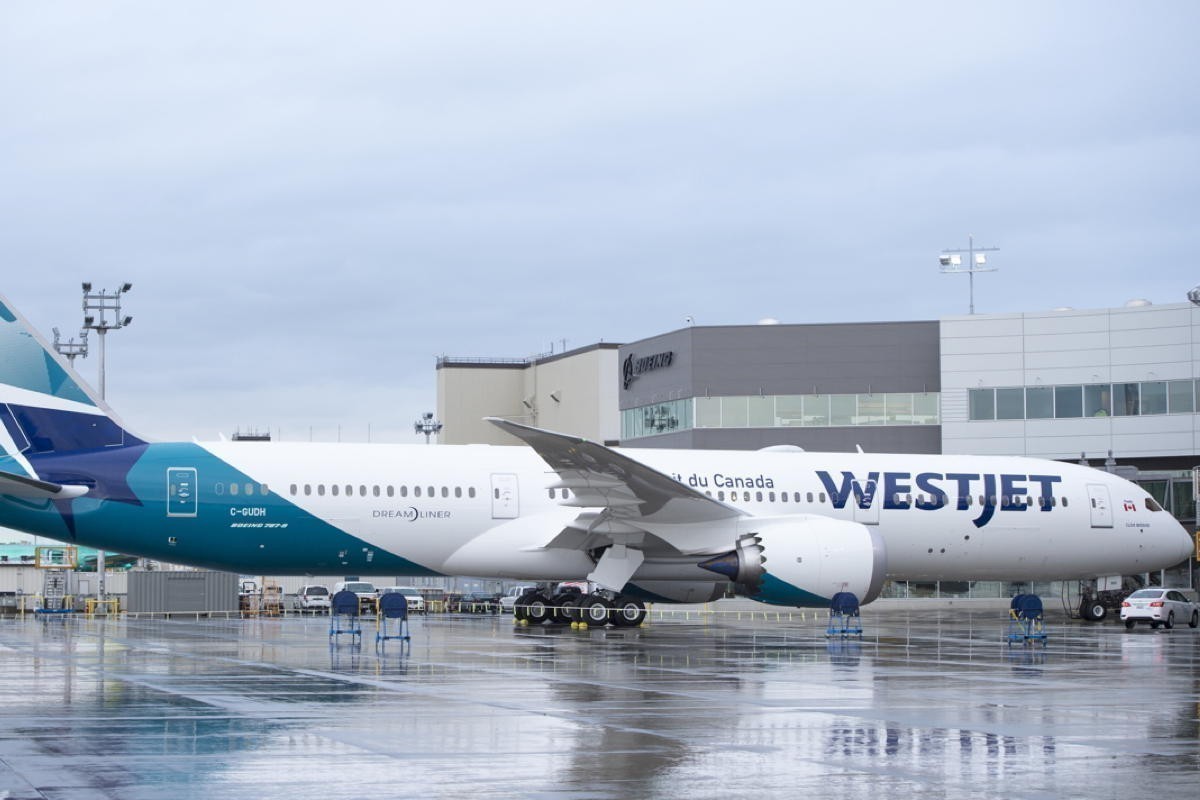
Most recently, WestJet revealed it will reduce capacity by four per cent in September and by just under three per cent in October, extending a series of cuts first implemented during the spring travel season.
Air Canada, too, has made notable adjustments, removing select routes from its future schedule while shortening some seasonal services.
At the same time, airlines have been reassuring customers that they have enough fuel to run a successful summer schedule.
Last month, the Lufthansa Group’s Chief Commercial Officer Dieter Vranckx said that concerns about a fuel shortage in Europe in the coming months are largely unfounded.
"There are no signs from our suppliers that fuel supply will be at risk this summer,” Vranckx said in an interview, shared on the airline’s website.
READ MORE: WestJet reduces fall flight capacity amid rising fuel costs
Air Canada has also set the record straight, sharing in a June 2 email to customers that it is not running low on fuel and will operate summer as planned.

“Please be assured that we are fully expecting to operate our current summer schedule. While global fuel markets remain dynamic, Air Canada has a diversified and sophisticated fuel supply in place,” the email reads.
“There is no fuel shortage affecting our operations, including across Europe, and we do not anticipate any significant impact through the summer.”
Air Transat has shared a similar message.
"Working in collaboration with its partners and suppliers, and supported by a robust supply chain, Air Transat has secured the fuel required to operate its full summer program," the airline stated in a press release last week. "Operations are running as planned."
Don't miss a single travel story: subscribe to PAX today! Click here to follow PAX on Facebook.