We use cookies on our website.
Some of them are necessary for the functioning of the site, but you can decide about others.

The International Air Transport Association (IATA) is calling for an end to "wildly inconsistent COVID-19 travel restrictions" that are stalling the recovery of air transport.
In turn, IATA is urging governments to implement simplified regimes to manage the risks of COVID-19 as borders re-open to international travel.
“Travel restrictions bought governments time to respond in the early days of the pandemic. Nearly two years later, that rationale no longer exists. COVID-19 is present in all parts of the world. Travel restrictions are a complex and confusing web of rules with very little consistency among them. And there is little evidence to support ongoing border restrictions and the economic havoc they create,” said Willie Walsh, IATA’s director general on Monday (Oct. 4).
Testing results for U.K. arriving passengers demonstrate that travellers are "not adding risk to the local population," IATA argues.
“Of the three million arrivals between February and August only 42,000 tested positive—or fewer than 250 a day. Meanwhile, the daily case count in the UK is 35,000 and the economy—apart from international travel—is wide open. People should be just as free to travel,” said Walsh.
In the last months, several key markets that had previously been closed have taken steps to open to vaccinated travellers. Among markets that were previously closed, Europe was an early mover, followed by Canada, the UK, the US and Singapore.
Even Australia, "which has some of the most draconian restrictions," is taking steps as it aims to re-open its borders to vaccinated travellers by November, IATA pointed out.
IATA is encouraging all governments to consider the following framework for re-opening borders:
A recent survey of the top 50 travel markets, accounting for 92 per cent of global traffic, reveals an urgent need for simplification of government measures governments.

“There is far too much complexity in the way borders are re-opening. The potential for a global re-connect could be hijacked by bureaucracies favouring stand-alone 'made-at-home' solutions over approaches that work across borders,” said Walsh.
Very few states are truly open.
Of the 50 states surveyed, 38 have some form of COVID-19 restriction on who can enter.
Only seven had no entry restrictions or quarantine requirements upon arrival. A further five have no additional restriction on who can enter but maintain quarantine measures for some after arrival.
There is no consistency among the 38 states which retain entry restrictions:
Twenty states exempt or foresee exemptions from restrictions in various forms for vaccinated travellers, but
There are complex conditions imposed by the 46 states requiring pre-departure testing
“The situation is a mess. It’s stalling recovery. Complete harmonization is unlikely. But some simple best practices that travellers can comprehend should be achievable,” said Walsh.
COVID-19 measures "must not be allowed to become permanent,' IATA said.
“Measures must remain in place only for as long as they are needed—and not a day longer. As we do with many safety regulations, defined review periods are needed. Otherwise, as we said in the aftermath of 9/11, well-intentioned measures could remain in place long after they are necessary, or have become technologically or scientifically obsolete,” said Walsh.
Safely re-opening borders is on the agenda of the International Civil Aviation Organization (ICAO) High Level Conference (HLCC) on COVID-19.
IATA also says that clear digital health credentials—documentation of vaccination or testing status—will be needed as borders re-open.
"Experience even at today’s low levels of travel tells us that there will be chaos in airports if we rely on paper processes," IATA said.
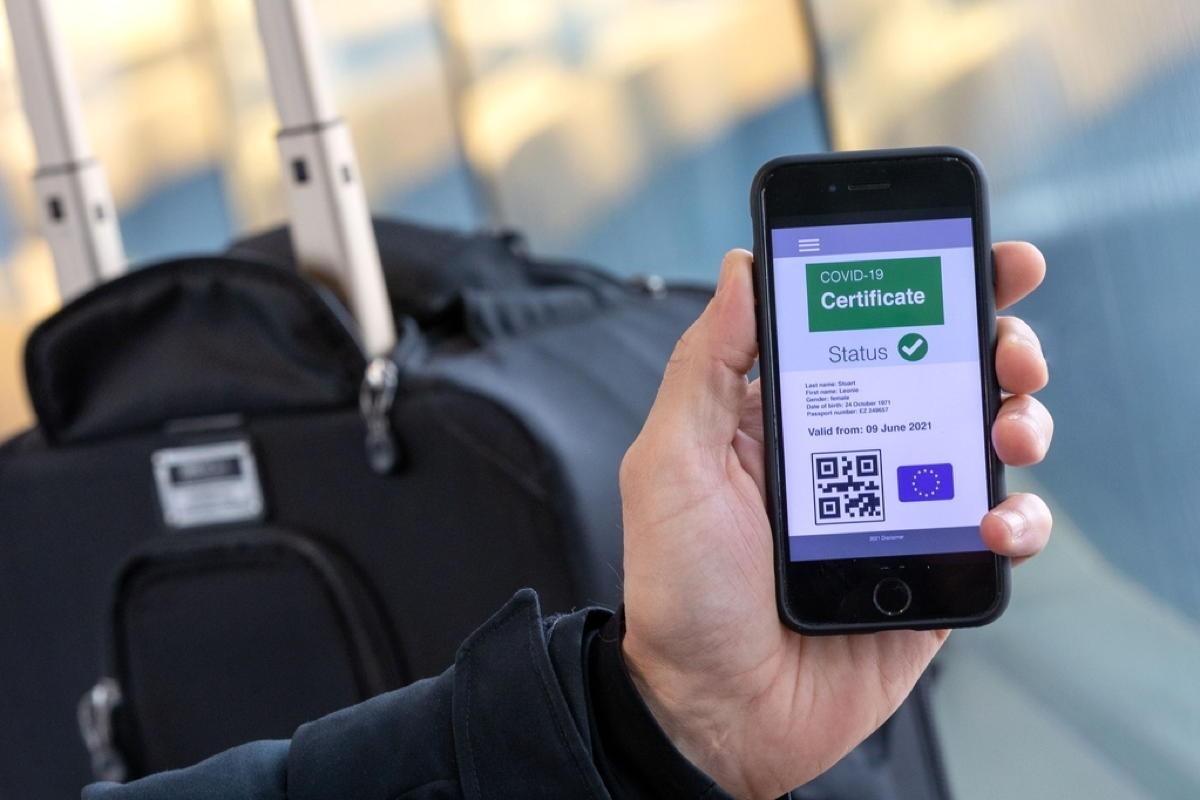
“Europe has made a good start. The EU Digital COVID Certificate (EU DCC) is an efficient and reliable standard to record test and vaccination status," said Walsh. "If governments are looking for a standard to follow, this is our recommendation. And if governments are looking for a ready-made solution to manage travel health credentials using e-gates, IATA Travel Pass is a solution. Irrespective of government use, an automated solution is essential for airlines."
"They will need to manage documentation verification using automated check-ins. If not, airport wait times and congestion will skyrocket as travel volumes increase."
"After extensive testing, it’s great to see IATA Travel Pass entering regular operations."
Don't miss a single travel story: subscribe to PAX today! Click here to follow PAX on Facebook.