We use cookies on our website.
Some of them are necessary for the functioning of the site, but you can decide about others.


Michael Pihach is an award-winning journalist with a keen interest in digital storytelling. In addition to PAX, Michael has also written for CBC Life, Ryerson University Magazine, IN Magazine, and DailyXtra.ca. Michael joins PAX after years of working at popular Canadian television shows, such as Steven and Chris, The Goods and The Marilyn Denis Show.
Despite Air Canada cancelling or delaying nearly 2,000 flights during the Canada Day long weekend, and a tweet from WestJet’s CEO laying the blame for a delayed flight he was on at the feet of Nav Canada, the airline industry is seeing “significant improvement” this summer, says Transport Minister Omar Alghabra.
Speaking to media last week, Alghabra took a moment to address flight disruptions as more Canadians pack into airplanes this summer.
“We're seeing significant improvement today, notwithstanding the headlines that we saw recently, from where we were last year,” Minister Alghabra said Friday (July 7), as reported by CTV News. “So we need to take stock in that, because there's been significant improvement, but we are still not at where ideally we should be and Nav Canada is an important player in this.”
(Nav Canada is a private corporation behind air traffic control towers and more).
READ MORE: Air passenger rights changes put burden of proof on airlines, not travellers, says Ottawa
The Liberal government is working to improve air travel for Canadians, and one initiative has been to strengthen the air passenger rights system.
As per proposed amendments to the Canada Transportation Act, Ottawa is looking to streamline processes for complaints to the Canadian Transportation Agency (CTA), with an emphasis on increasing air carriers’ accountability.
Even if things are improving, Canadian aviation is still not all roses.
Last week, Alexis von Hoensbroech, CEO of The WestJet Group, took to Twitter to complain how his very own WestJet flight to Vancouver was running 2.5 hours behind.
“Frustrating!” wrote the CEO, posting a picture of himself, with a grumpy face, from the middle seat of an aircraft. “Delayed by 2.5h on our own @WestJet flight to @yvrairport because @navcanada is understaffed. We would have been perfectly on time, now many guests will miss their connections. Shows again why we need a proper shared accountability system across the entire sector!”
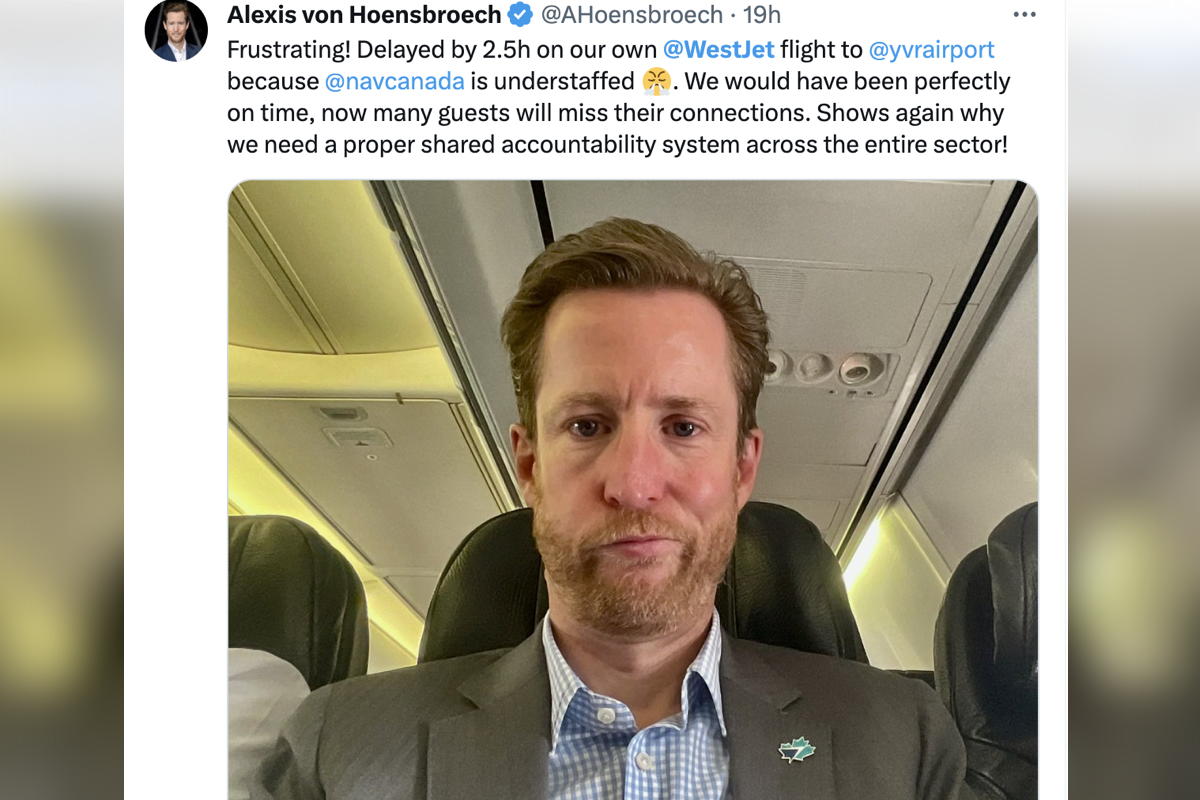
The seat tweet aligns with an argument that WestJet has been making for some time now, and that is that airlines should not be the only ones held responsible for delays and cancellations.
This has been WestJet’s argument ever since the carrier, alongside Air Canada and Sunwing, was hauled into a parliamentary hearing in January to testify about the disruptions that left Canadian travellers scrambling over the winter holidays.
WestJet’s leadership has been calling on Ottawa to address what it calls a gap in consumer protection, and to implement a system that recognizes shared accountability in air travel.
READ MORE: Other players should share compensation costs for flight delays, says WestJet CEO
von Hoensbroech has previously voiced his support for APPR legislation, which states how airlines must communicate and reimburse or compensate customers for delayed or cancelled flights or for damaged luggage.
But the CEO believes airlines aren’t the only ones to blame.
“There's airports, there's navigation, there's security, there's border control, there's ground handlers," von Hoensbroech told media last February, noting that those departments aren’t subject to the same rules and regulations as airlines.
“Whatever happens, it's always the airline, and the airline basically becomes the insurance company for the entire industry,” the CEO said at the time. “If you want an aviation sector that collectively produces a reliable product for our guests, then there has to be some shared accountability.''
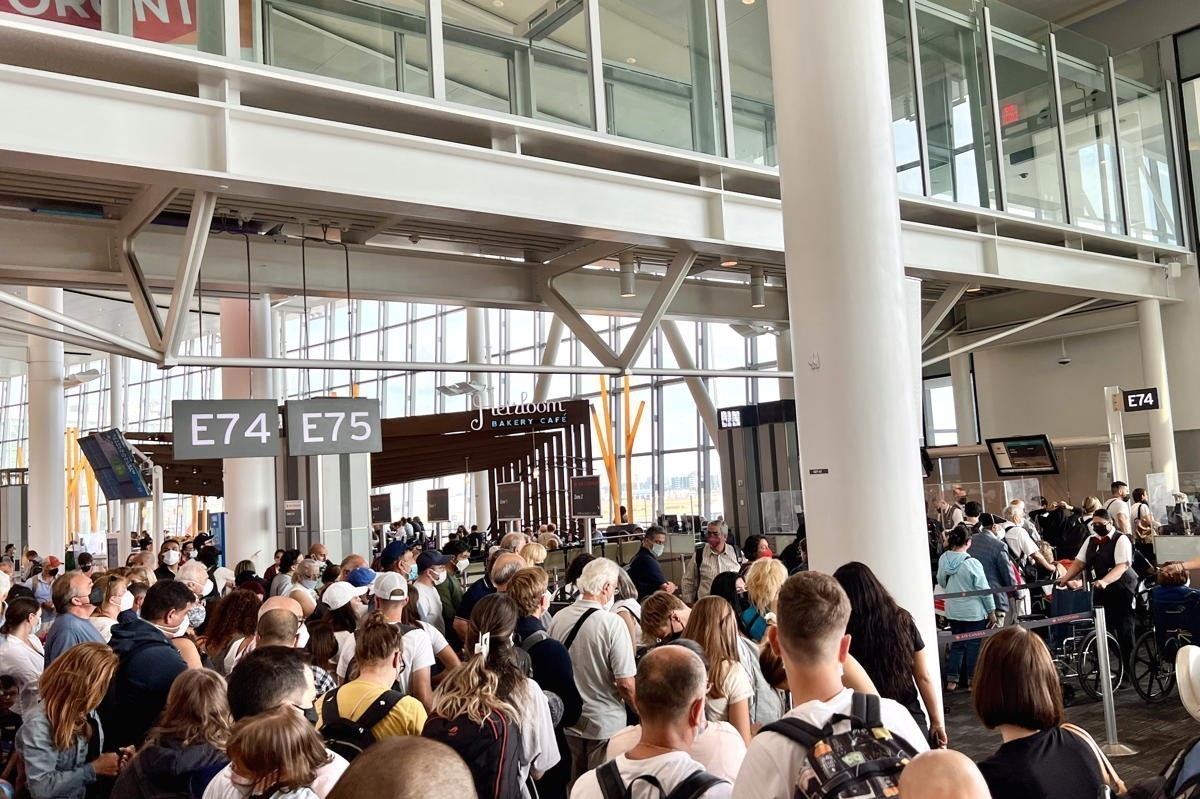
Nav Canada, for its part, says it is working to mitigate any staffing issues that may arise.
In a statement to BNN Bloomberg last week, a spokesperson for Nav Canada said aircraft capacity issues in Vancouver combined with "unplanned absences" have caused delays.
"NAV CANADA takes any staffing-related (Ground Delay Programs) very seriously, and we work actively to mitigate them through forecasting, optimizing scheduling and bringing in additional resources," the statement reads in part. "Our dedicated air traffic controllers are working actively to keep aircraft moving safely and efficiently."
Alghabra said Friday that he’s been in conversations with the CEOs of Nav Canada and the country’s major airlines to find solutions to recent disruptions that have delayed flight schedules.
Delays and cancellations plagued Canadian airports for several months last summer as the travel industry restarted after months of pandemic-related shutdowns and interruptions.
Things got so bad that, at one point, Toronto's Pearson Airport was named the worst airport in the world for flight delays.
The travel chaos continued into the 2022 winter holiday season as thousands of Canadians were left stranded at airports, and in destinations, with little to no communication from airlines, after a snowstorm slammed into select provinces.
Alghabra said Friday that Canadians shouldn’t delay their summer vacations out of concern for possible flight delays.
“I want Canadians to worry more about which hotel to stay at than what is happening, what's going to happen, at airports or on planes,” Alghabra told reporters.
“As I said, today's performance is way better than it was last year…And it needs to get better and we're working on it, but I don't want Canadians to spend time preoccupied with the operation of the sector. That's left up to airlines, airports, Nav Canada, and Transport Canada, and we're doing everything collectively we can to ensure that we have an efficient system.”
Don't miss a single travel story: subscribe to PAX today! Click here to follow PAX on Facebook.