We use cookies on our website.
Some of them are necessary for the functioning of the site, but you can decide about others.

Air France reached a milestone on Tuesday (July 5) with the arrival of its tenth Airbus A220-300, the latest in its medium-haul fleet.
By 2030, the latest generation aircraft will make up 70 per cent of the Air France fleet - compared to seven per cent today – thanks to an ambitious investment plan of one billion euros per year.
The aircraft left the Airbus assembly line in Mirabel (Quebec) to join Paris-Charles de Gaulle, where it will operate the company’s short and medium-haul flights.
It will operate its first commercial flight to Venice on July 5.
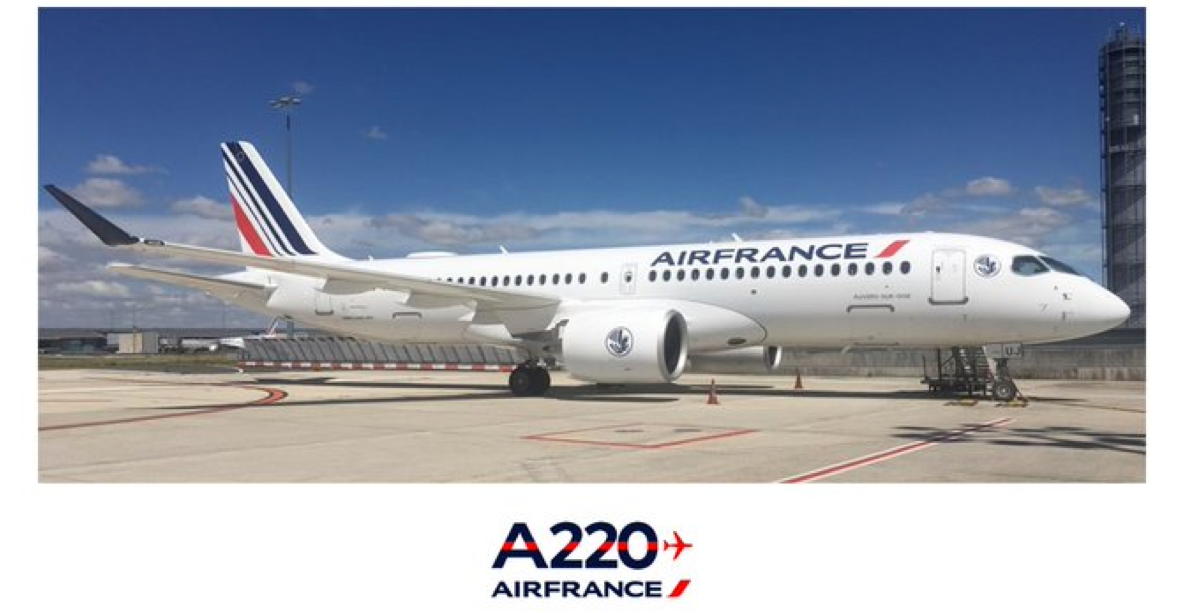
The aircraft sports its new name “Auvers-sur-Oise” at the front of its fuselage, in reference to the town north of Paris which is internationally known for the landscape and impressionist painters Paul Cézanne, Camille Corot and Vincent Van Gogh.
The Dutch painter spent his last days in Auvers-sur-Oise during a period of intense creativity.
READ MORE: Air France unveils first Airbus A220-300 (PHOTOS)
Since 2019 and the delivery of its first Airbus A350, Air France has revived the tradition of naming its aircraft after French towns. Auvers-sur-Oise is the 96th town to be honoured on the company’s aircraft.
Between now and the end of 2025, 60 A220-300s will gradually replace some of Air France’s medium-haul aircraft.
With up to 15 deliveries scheduled each year, this is the fastest fleet integration of an aircraft in the history of Air France.
The most innovative and efficient single-aisle aircraft in its category, the Airbus A220-300 is suited to Air France’s short and medium-haul network.
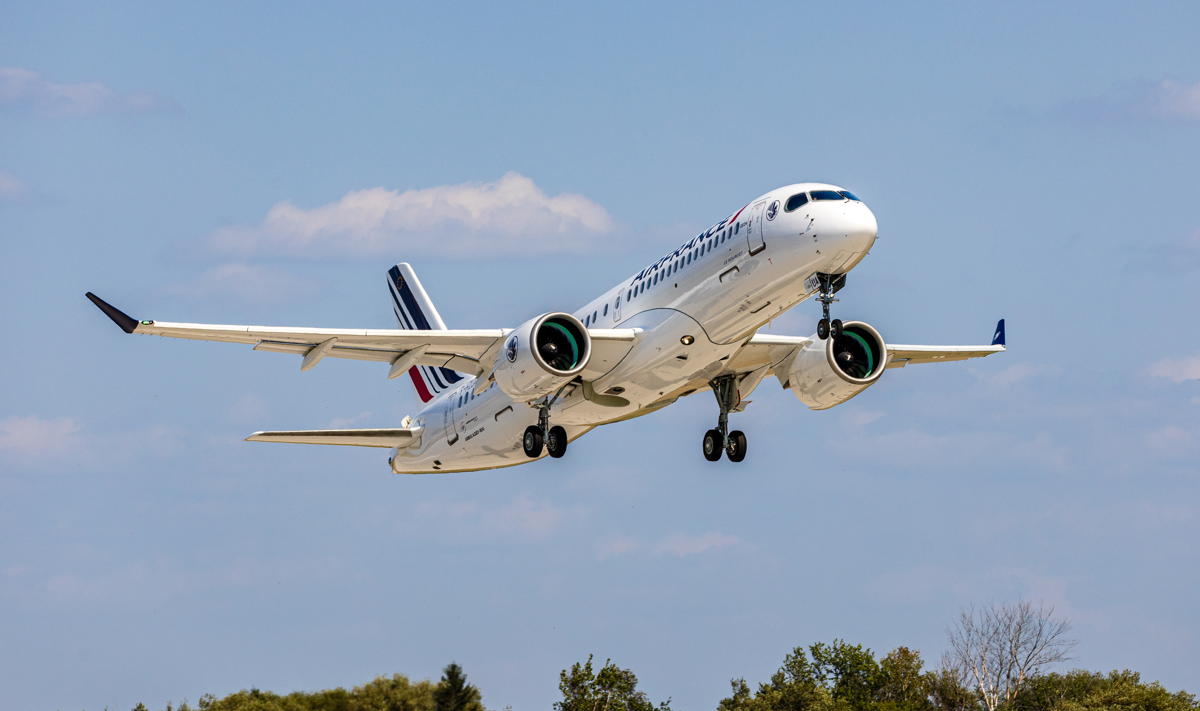
It provides a cost reduction per seat of 10 per cent compared to the Airbus A318 and A319 and stands out for its energy efficiency, consuming 20 per cent less fuel than the aircraft it replaces and its CO2 emissions are also reduced by 20 per cent. Its noise footprint is also 34 per cent lower.
"These characteristics will play a decisive role in reducing Air France’s environmental footprint and achieving its sustainable development objectives," the airline said Tuesday.
Within the framework of its “Air France ACT” programme, the company is targeting a 30 per cent reduction in CO2 emissions per passenger/km by 2030 compared to 2019.
This target excludes so-called “offsetting” actions in order to exclusively take into account measures that strictly reduce direct and indirect emissions.
This summer, the Air France Airbus A220-300 serves Berlin, Hamburg and Munich (Germany), Milan-Linate, Milan-Malpensa, Bologna, Rome, Naples and Venice (Italy), Barcelona, Valencia and Madrid (Spain), Lisbon (Portugal), Copenhagen (Denmark), Athens (Greece), Helsinki (Finland), Vienna (Austria), Warsaw (Poland) and Stockholm (Sweden) on departure from the Air France hub at Paris-Charles de Gaulle.
Don't miss a single travel story: subscribe to PAX today! Click here to follow PAX on Facebook.