We use cookies on our website.
Some of them are necessary for the functioning of the site, but you can decide about others.


Michael Pihach is an award-winning journalist with a keen interest in digital storytelling. In addition to PAX, Michael has also written for CBC Life, Ryerson University Magazine, IN Magazine, and DailyXtra.ca. Michael joins PAX after years of working at popular Canadian television shows, such as Steven and Chris, The Goods and The Marilyn Denis Show.
There’s more to Ireland’s food scene than corned beef, cabbage and soda bread.
Just ask Irish pastry Chef JR Ryall, who says there’s a rising tide of young chefs in Ireland who are injecting fresh creativity into traditional dishes using local ingredients that, perhaps, don’t get enough praise or recognition.
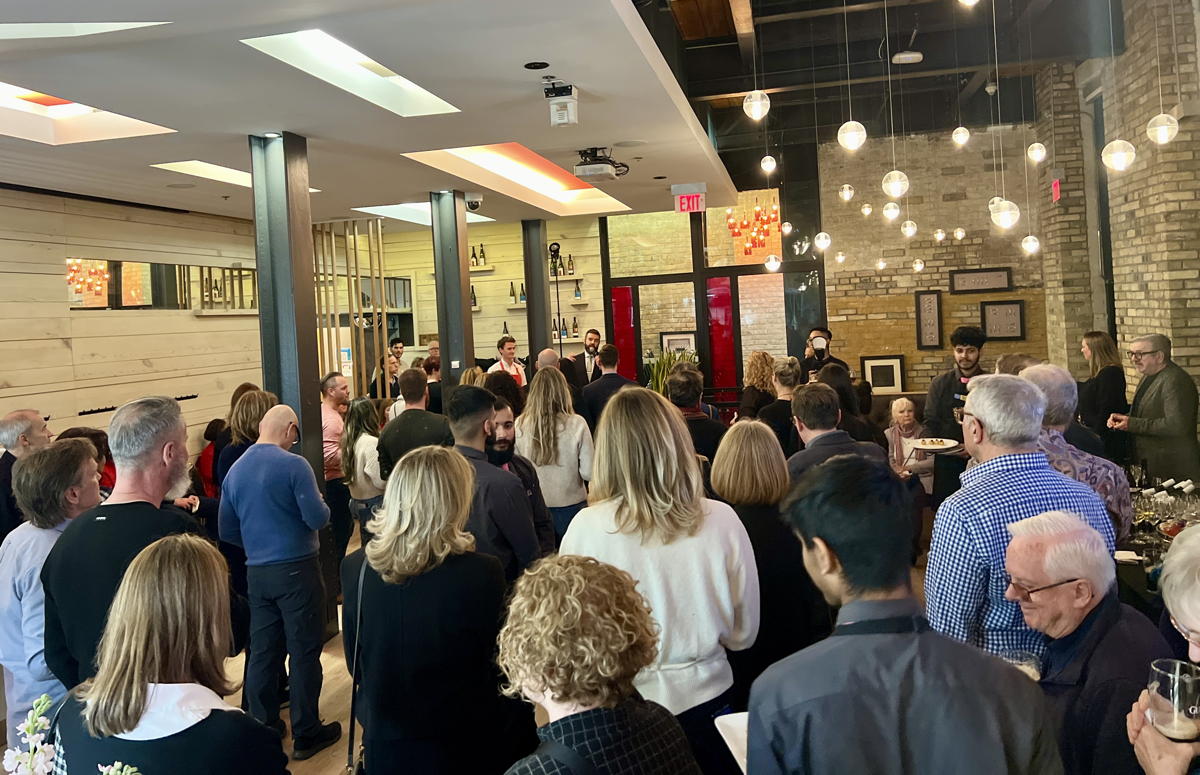
“Our butter really is the best. It's so nice to be able to say that, because it's true,” said Chef Ryall, addressing a room full of foodies, media and aspiring chefs Wednesday night (Jan. 29) at The Chefs’ House at George Brown College in Toronto, where Ryall has spent the week visiting, sharing trade secrets from his main headquarters, the Ballymaloe House Hotel in East Cork, located in southwest Ireland, where he, for over a decade, has reigned as head pastry chef.
Modern Irish food (and Ireland’s best-kept culinary secret, perhaps) stands on the success of the island’s ability to produce clean and delicious produce, Chef Ryall explained.
“Our meat, our fish, our eggs. Things that are so easy to take for granted. We're so lucky to have them,” he said.

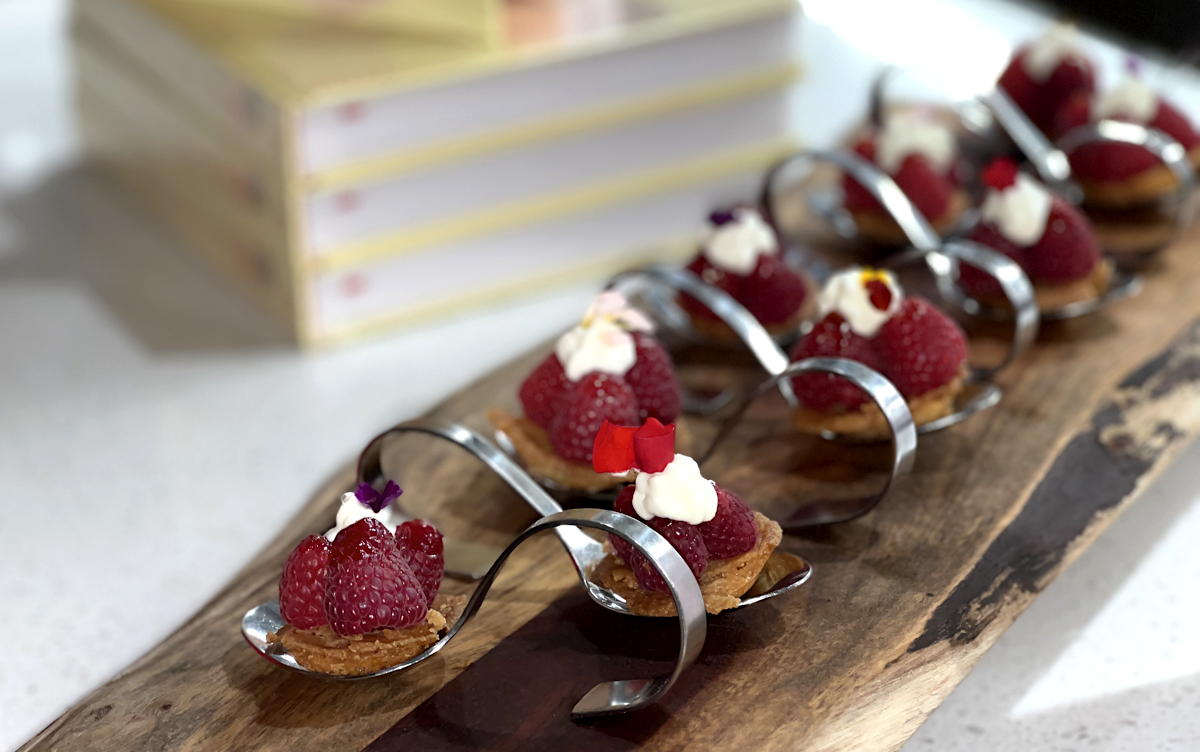
Chef Ryall’s specialty, however, are desserts, many of which are showcased in Ryall’s acclaimed cookbook, Ballymaloe Desserts: Iconic Recipes and Stories, which was published two years ago.
Attendees at last night’s get-together, which was hosted by Tourism Ireland and the Ireland Canada Foundation, had a chance to sink their teeth into signature creations, like Irish cheddar cheese croquettes with Ballymaloe relish, smoked salmon and cucumber pickle on Ballymaloe brown bread, and Carrageen moss pudding with Irish Coffee sauce.
Speaking to PAX at the event, award-winning Chef Ryall said he thought it would be nice to share a “a little taste” of what’s going on at the Ballymaloe (pronounced ba-lee-ma-loo), a family-owned, 32-bedroom hotel and restaurant, nestled in the countryside of East Cork.
The hotel’s restaurant opened in 1964 – long before Ryall’s time. “It's hard for us to imagine now what Irish food was like, but there wasn't a lot of pride placed on produce. Little did most people know how good the produce was,” Ryall said.
The late Myrtle Allen, a Michelin star-winning chef, who founded the business back in the day, was one of the few who realized just how good Ireland’s ingredients were.
“What made the Ballymaloe different compared to others was that she focused on what was around her,” said Chef Ryall, who names Myrtle Allen as one of his key inspirations (she trained him how to cook).
“She began using what was in her garden, her neighbour’s garden, in her farm, and her neighbour’s farm. It completely set her food apart and that gave Ballymaloe a taste of place.”
Allen – who would be 100 today, if she was still alive – would take French recipes (like Hollandaise sauce, for example) but use local Irish butter.
“It suddenly wasn't French anymore because it tasted different,” Ryall said. “It tasted Irish. And that's really what Ballymaloe was built on,”
Ireland’s OG farm-to-table eatery, perhaps? Quite possibly.
Today, historic Ballymaloe House, a member of Small Luxury Hotels of the World, set on 300 acres of land near the coastline, is a countryside retreat, with luxurious accommodations, as much as it is celebrated farm-to-fork dining experience.
It’s internationally recognized as “the birthplace of modern Irish cuisine.”
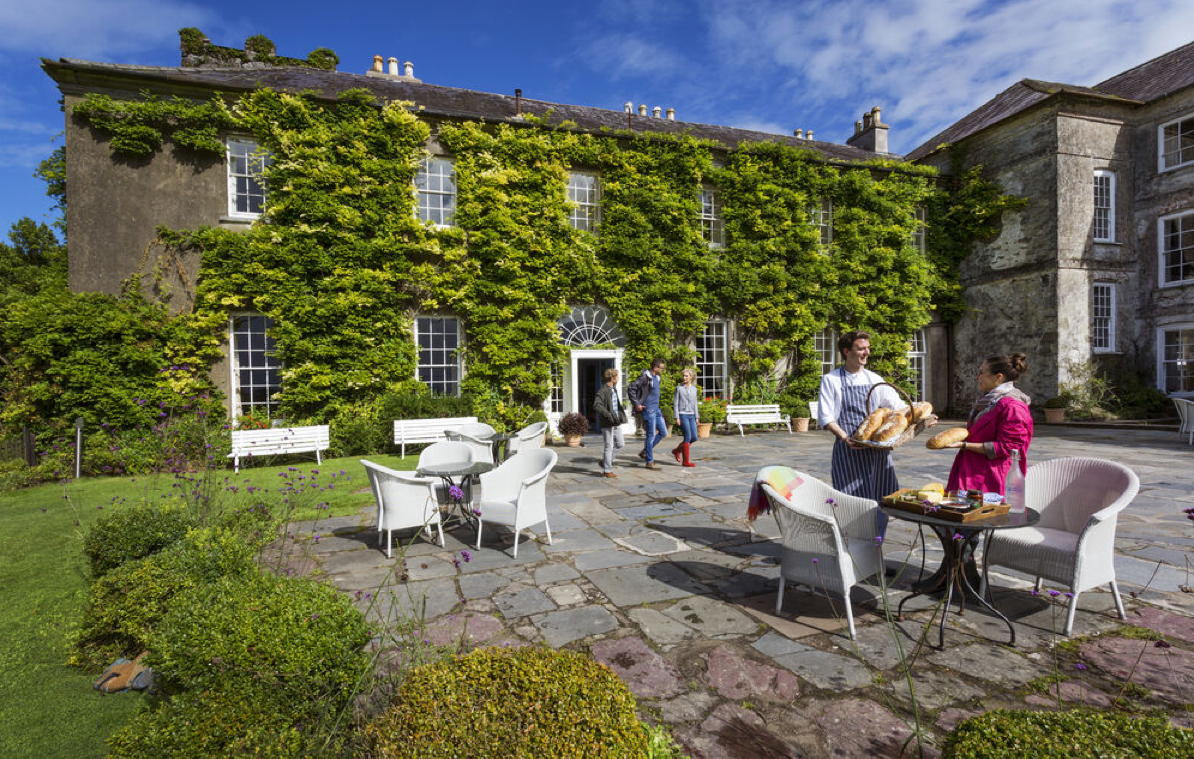
The on-site Ballymaloe Cookery School, meanwhile, offers cooking courses and demonstrations for visitors looking for a hands-on experience at the organic farm, which produces the fresh vegetables, fruit, meat and dairy products – all of which are used in the kitchen every day.
“Over the years, Ballymaloe has developed recipes that have evolved in our kitchens to such a point that when you eat them, it feels Ballymaloe in the same way a baguette might feel French,” Chef Ryall said.
Spotted last night was Sandra Moffatt, country manager for Canada at Tourism Ireland, who called Ireland’s culinary side a “best-kept secret.”
“We always ask clients, when they return from Ireland, ‘What was one thing that surprised you?’ And time after time, they say it's ‘the food,’” Moffatt said. “We're known for our meat and potatoes, which is great, but we're also an island. We have the freshest seafood. We have grass-fed cows, which produces amazing meat, but also amazing butter.”
“You'll see a yellow colour in our butter. That's the carotene from the grass that the cows are eating. It's really, really rich.”

Moffatt’s favourite Irish butter brand, Kerrygold, “is liquid gold,” she said.
Is Ireland’s farm-to-table scene a serious business? You butter believe it.
“It’s part of the culture now,” Moffatt said. “There are restaurants that will only use produce that’s found within 50 kilometers.”
Inviting visitors to enjoy the countryside is one way that Ireland is working to get ahead of overtourism (which, locally, isn’t a huge problem yet, Moffatt said, but it’s something her team is monitoring).
“The objective, for us, is to support local communities,” she said. “We want to spread people out, get them to visit off season, and invite them to places they wouldn't have thought of before.”
This June, Tourism Ireland will introduce "Slow Tourism Month," featuring initiatives that highlight sustainable experiences across the island, like visiting the Ballymaloe.
The strategy comes as Canada jumps from seventh to fifth place in terms of delivering revenue to Ireland – based on last year’s numbers.
That largely has to do with improved connectivity. Canadians have seasonal access to Ireland from Vancouver, Calgary, Montreal, Halifax, and year-round flights from Toronto.
Tourism Ireland, for one, is excited to see the return of WestJet’s St John's, Newfoundland to Dublin service. It’s a long-anticipated flight, bridging Newfoundland with the Emerald Isle, that takes just four-and-a-half hours.
In 2023, the island of Ireland welcomed approximately 180,000 Canadian visitors – and ancestry trips are a big draw (some 4.5 million Canadians claim Irish ancestry).
“Canada is a really, really important market for us,” Moffatt said, noting that the average Canadian will spend roughly 11.5 nights in Ireland.
“Canadians really appreciate a vacation. They stay longer, they spend more, they really see the destination…They go to castles, take golf vacations, and stay in manor houses,” she said.
Ireland is small and big at the same time. Visiting once will check some boxes, but more often than not, people will return, Moffatt said.
“Once you go, you're going to want to go back," she said. "Repeat visitation is a big one for us."
Don't miss a single travel story: subscribe to PAX today! Click here to follow PAX on Facebook.