We use cookies on our website.
Some of them are necessary for the functioning of the site, but you can decide about others.

Hurtigruten’s vision for the world’s most energy-efficient cruise ship is advancing, with its Sea Zero project recently completing a new phase of rigorous testing at SINTEF Ocean’s facilities in Trondheim, Norway.
Large battery packs, retractable sails, air lubrication systems, contra-rotating propellers and an energy-optimized hull are among the innovations being evaluated.
Hurtigruten wants to design a ship that can sail without emissions in normal operation on the Norwegian coast from around 2030.
“We are learning a lot from these tests, and we now see that many of the ambitious goals in this project can also be implemented in practice,” said Gerry Larsson-Fedde, Chief Operating Officer at Hurtigruten, in a press release.
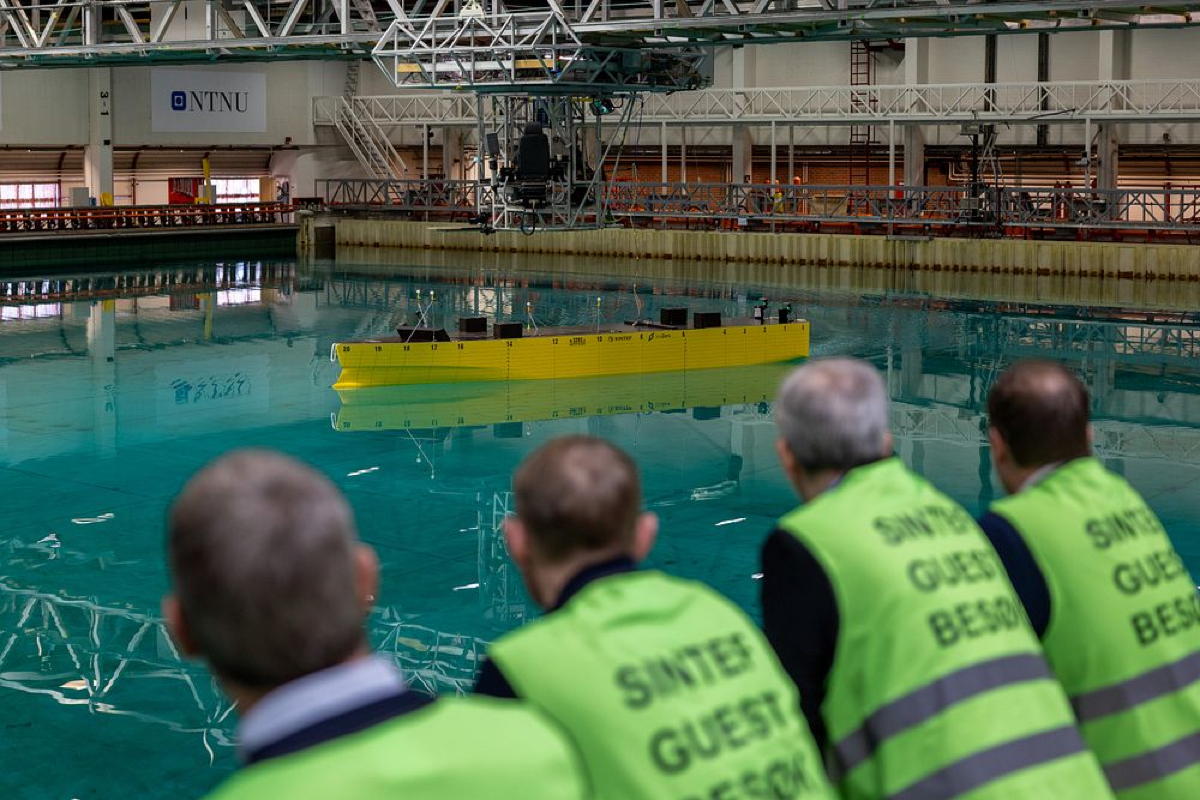
Following months of design work and testing, the ship design has been further refined to be longer, lower, and more stable, now featuring two large retractable sails, that can be raised or lowered as needed.
The recent digital simulations and physical trials in Trondheim, using an eight-metre model tested in SINTEF’s ocean basin and towing tank, confirmed that the sails alone could reduce energy consumption by 10–15 per cent.
“For each round we make changes to optimise the design. Now the ship is eight meters longer and slightly wider, and the height has been reduced by one deck. This provides, among other things, better stability. We have also gone from three to two sails,” added Larsson-Fedde.
The Sea Zero concept aims to cut energy between 40-50 per cent compared to today’s ships.
With that reduction, batteries charged with shore power connectivity in key ports could make emission-free operations possible.
"With the reduction in energy use we’re aiming for, it’s realistic to fit a battery system with enough energy to allow the ship to sail between charging ports under normal weather conditions," said Trond Johnsen, Project Manager for Sea Zero, in the release.
Hurtigruten is working with Norwegian research institute SINTEF and other leading partners to refine the design.
The goal of Sea Zero is to create the most energy-efficient cruise ship.
The new ship model will be 143.5 metres long – Hurtigruten’s longest vessel to date and have two retractable sails with solar panels (10–15 per cent energy savings), contra-rotating propellers and air lubrication to reduce drag.
It will also have smart energy systems for heating, cooling, and onboard operations and bring an estimated 40–50 per cent in energy savings versus current ships.
“The Coastal Express has sailed the Norwegian coast for 130 years. For us to sail for 130 years more, we need to change the way we sail,” added Hedda Felin, CEO of Hurtigruten.
Don't miss a single travel story: subscribe to PAX today! Click here to follow PAX on Facebook.