We use cookies on our website.
Some of them are necessary for the functioning of the site, but you can decide about others.

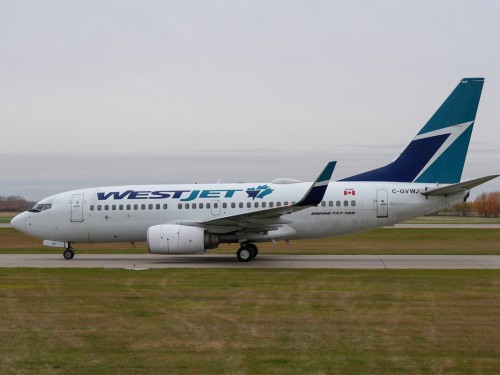
WestJet has purchased the first Sustainable Aviation Fuel (SAF) supplied in Canada by Shell Aviation, marking a step forward in the airline's goal to achieving net-zero emissions by 2050.
"WestJet is committed to enhancing our position as a first mover in sustainability technologies. Just as we pioneered advancements in Winglets and drag reduction, WestJet proudly stands as the first airline to acquire SAF by Shell in Canada," said Angela Avery, WestJet Group's EVP and chief people, corporate and sustainability officer, in a press release.
"Thanks to Shell's world-class fuel supply chain and WestJet's proven track record in sustainability, this first step sets the stage for future collaboration and innovation to encourage investments in this important lever for decarbonization."
SAF remains one of the more viable and scalable in-sector options for reducing emissions in the 2050 timeframe and has the potential to reduce lifecycle emissions by up to 80 per cent when used neat, compared with conventional aviation fuel, according to IATA.
SAF acquired from Shell Aviation is blended with conventional jet fuel to meet all certification and safety requirements, while requiring no new investments in aircraft engines, fuel infrastructure or distribution processes, WestJet says.
To supply WestJet with SAF, Shell Aviation uses a program called Avelia, a blockchain-powered digital SAF book-and-claim solutions for air travel.
Avelia uses blockchain to provide clear and transparent tracking of the environmental attributes of SAF delivered into the aviation fueling network.
Environmental attributes can be allocated to both airlines and business customers, while avoiding issues such as double counting, WestJet says.
This means corporations can confidently view verified lifecycle emissions reductions from SAF today, while working to establish sufficient SAF to meet their future net zero or science-based targets.
In a statement last February, Willie Walsh, IATA’s director general, said governments and fuel suppliers need to do more if aviation wants to achieve their net-zero goals.
“The industry’s goal to reach net zero CO2 emissions by 2050 remains steadfast,” he said. “To accelerate the transition, we need governments and fuel suppliers to step up and do more.”
He says IATA saw a strong increase in the use of SAF in 2023 – but SAF is still only three per cent of all global renewable fuels production.
“That is unacceptable,” Walsh said at the time “Aircraft have no option but to rely on liquid fuels, whereas other transport modes have alternatives.”
“A massive collective effort is needed to increase SAF output as a proportion of overall renewable fuel production as quickly as possible.”
Don't miss a single travel story: subscribe to PAX today! Click here to follow PAX on Facebook.