We use cookies on our website.
Some of them are necessary for the functioning of the site, but you can decide about others.

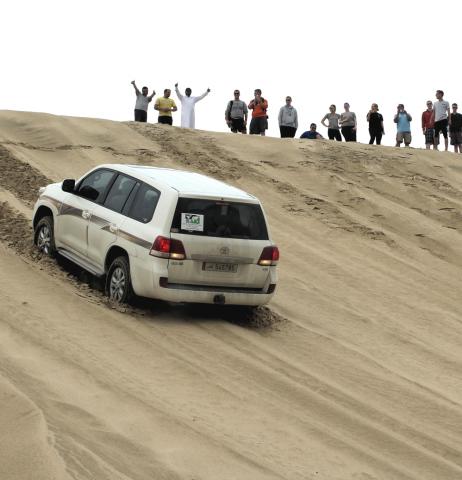
“Nonono!” I squeaked as our SUV slowly rolled over the crest of a sky-high sand dune, projecting us downwards into a full 75 degree tilt.
My driver was a heavy-set local Qatari man who wore a grey t-shirt with the phrase “BOOST YOUR TRAINING” stamped on the front of it. He giggled at me like a school boy as I winced and held on for dear life.
“Don’t worry my friend. I’ve been doing this for nine years!” he shouted as he slammed his foot on the gas pedal, sending our 4x4 rocketing down the steep sand hill, full speed ahead.
My eyes bulged and I swallowed my gum as the truck plowed into the earth, bumping us to and fro in our seats as if we’d been hit by a gang of bumper cars.
He pressed onwards over the desert floor at 100 kilometres an hour. GA-DUNK! The SUV bounced over a sand hole, giving up any shock resistance it had left.
My driver hit the gas again. VRROOOM! Sand dune! Right ahead!
We accelerated up another mountainous sandy hill, this time scaling the side of it as if we were driving on a 90-degree angle. I nervously looked downward through the passenger window, visualizing us toppling over into the Inland Sea below.
“Now you’re just showing off!” I shouted, making sure my seat belt was fastened. The driver roared off the dune and into an endless horizon of barren desert, grinding his tires into the loose sand and did a series of zig-zags – the kind of stunt usually reserved for truck commercials – just to prove my point.
This is what local Qatari folk call “dune bashing,” an off-road adventure where drivers deflate the tires of their 4x4 Toyota Land Cruisers to about 12 psi and head out into the wide open desert of Masaieed and the Sealine Resort (camel ride and tea break included).
The jarring ride, hosted by Qatari International Adventures, takes guests soaring over artful sand dunes and dry plant life towards the sea-drawn borderline of rocky Saudi Arabia about 45 km from downtown Doha.
And it’s both terrifying and amazing all at once.
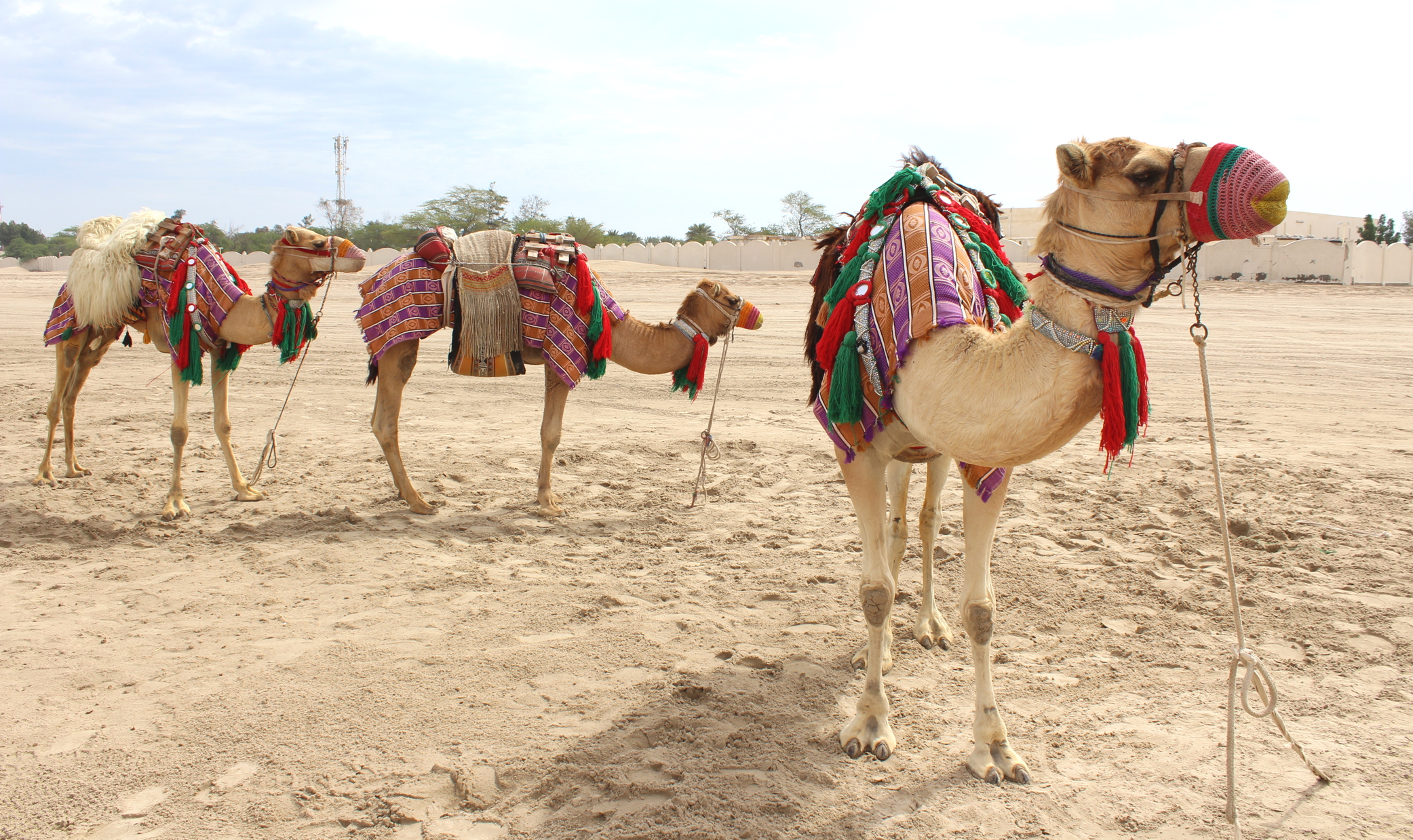
You could say dune bashing was one way I shook off the jet leg upon arriving in Doha, which is the capital city of the small-but-mighty country of Qatar.
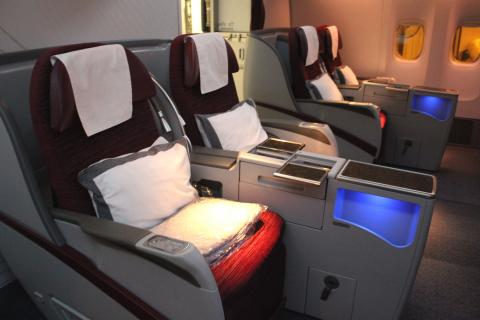
Qatar Airways flew PAX to the glittering Middle Eastern city of nearly 1 million people to not only experience its high-end hotels and authentic restaurants that shine brightly along the coastline of the Arabian Gulf.
Flying anywhere with Qatar Airways is an experience worth writing home about. As I flew at 28,999 feet at 571 miles per hour in a Boeing 777, I ate braised lamb shank while enjoying 78 inches of leg room and a high-tech seat with its own massage functions in business class.
All passengers on Qatar Airways have access to 2,000 entertainment options on an easy-to-use screen. The cabin’s floral air quality has a certain je ne sais quoi to it, too. In short: you simply won’t want to get off the plane.
Walking through Doha’s newly-opened Hamad International Airport sets the tone immediately. Its interior is chic, yet playful, boasting a 23-foot-tall, 35,000 pound sculpture of a yellow teddy bear that Qatar’s royal family reportedly purchased for $6.8 million U.S. dollars.
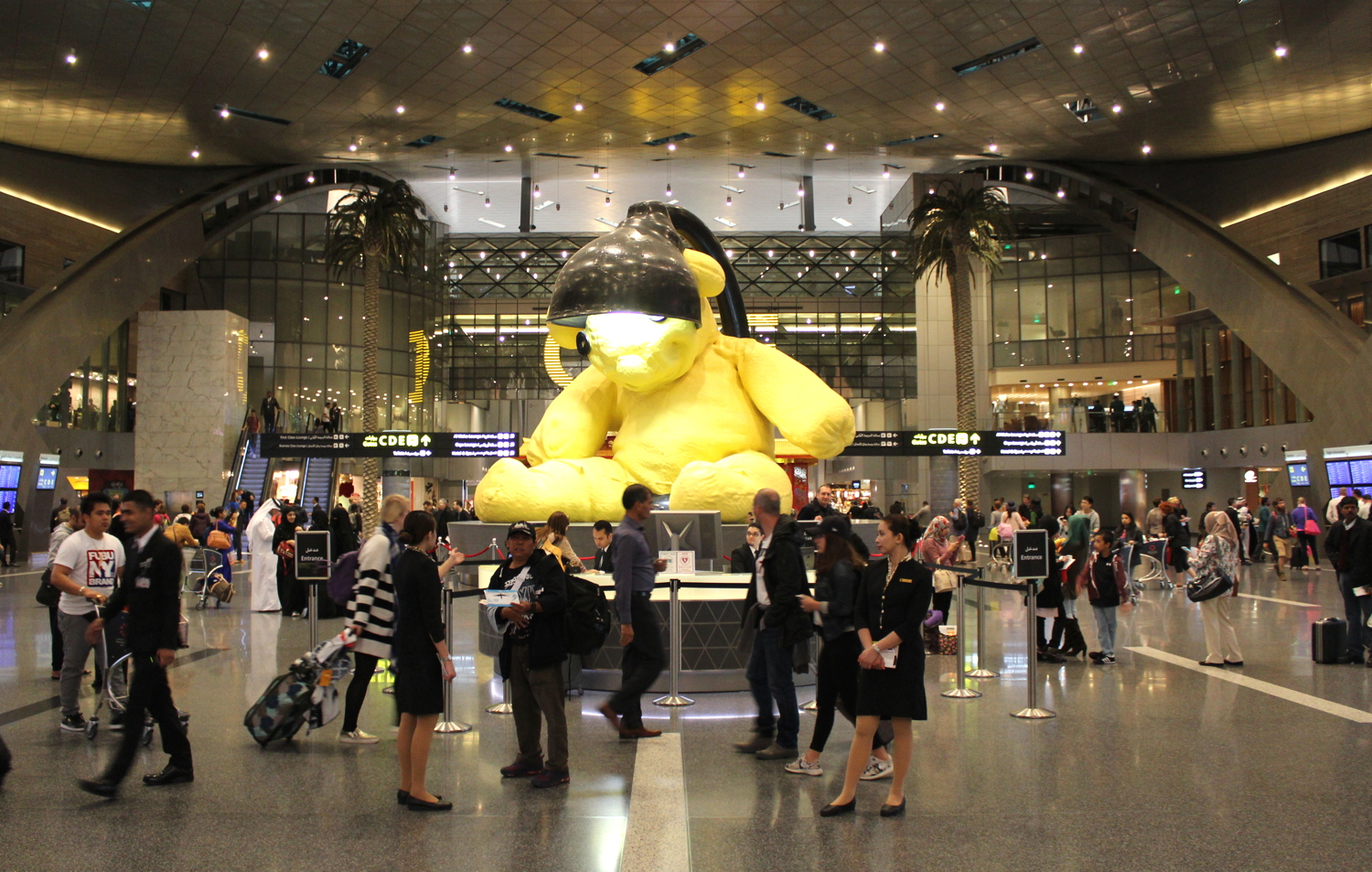
Local Qataris are among the richest people in the world thanks to the country’s stake in oil and natural gas. Sometimes it takes a giant teddy bear to make a good first impression, which is one of Doha’s strongest suits.
Driving into the city at night feels like entering another planet. Along Doha’s main highway sit more than 1,000 28-metre-high LED light poles that transitionally glow from blue to purple to green beneath a screen of tiny Arabic writing. If you’re used to plain old concrete hydro poles, it’s a psychedelic sight.
Doha’s futuristic skyline of twisty, curvy, and sphere-shaped skyscrapers that sit along its laid-back Corniche in Doha’s West Bay neighbourhood are outlined by bold neon lights, creating a sense of place parallel to the sci-fi movie Tron.
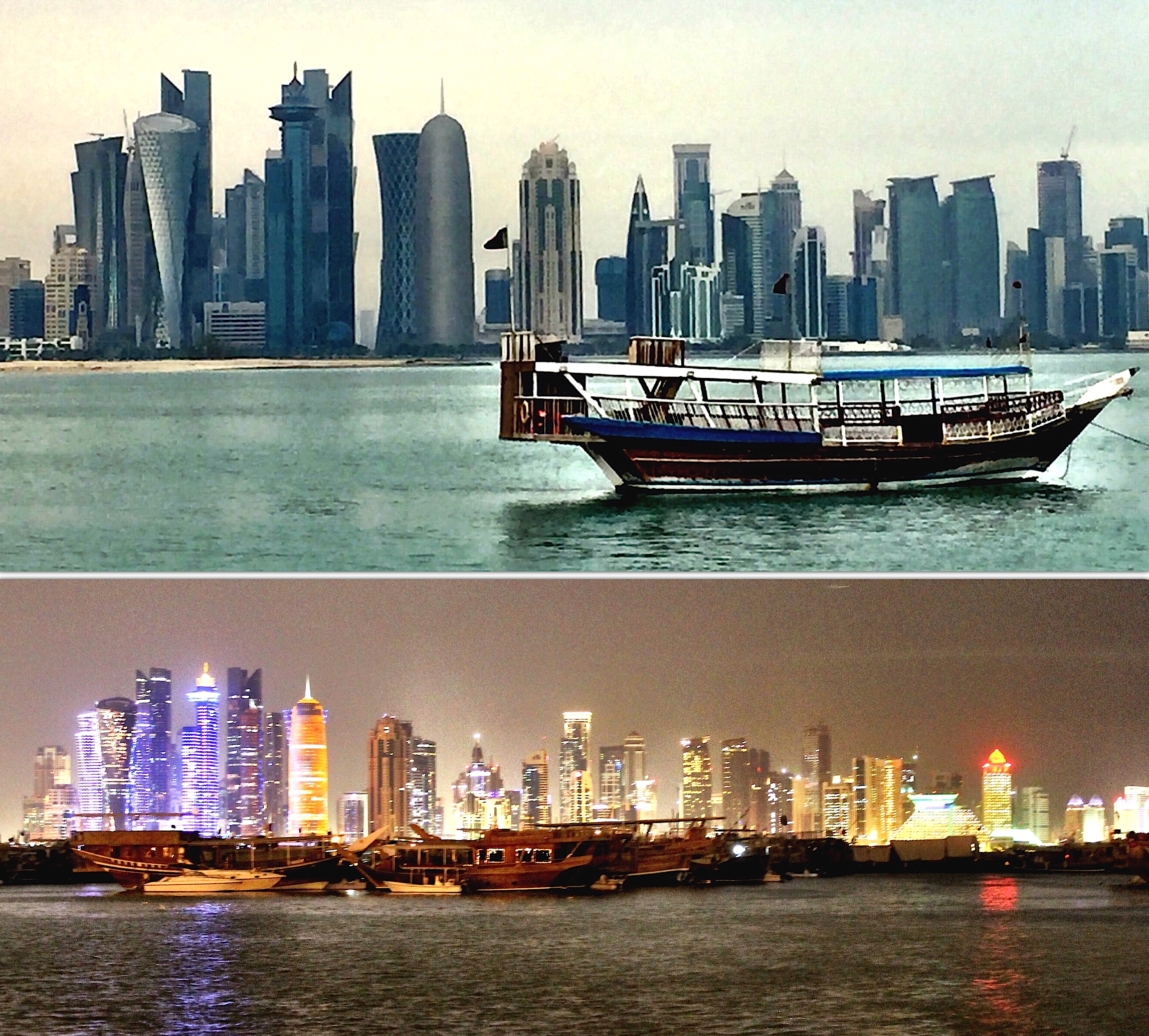 And urban developers are still building Doha like a game of SimCity. The Pearl, for instance, is an artificial island spanning nearly four million square metres that is set to create 32 kilometres of new coastline. It will reportedly house 45,000 residents upon completion in 2018.
The city will need the extra space. Qatar, as a country, has more than 2 million people, the majority of which are expats. The population is growing. And fast.
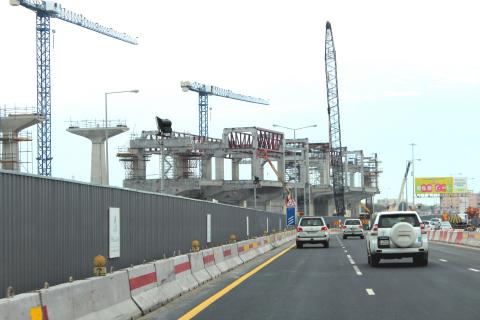
There’s a sense of urgency in town to get things built by 2022, which is when Qatar is set to host the FIFA World Cup (becoming the first Arab country to do so).
The soccer bid has spawned billions of dollars in urban development. Bulldozers and cranes are literally everywhere as plans to build the country’s first-ever metro system are well underway, along with state-of-the-art sports facilities, malls and hotels.
The Doha of today will likely look extremely different in 10 to 15 years. But that’s not to say the city doesn’t maintain its historical assets.
Doha’s Souq Waqif, which translates to “The Standing Market,” is a tourist hot spot and nearly a century old. It was renovated in 2006 to preserve its architecture, now serving as a marketplace for hundreds of vendors selling garments, spices, pet birds and must-try restaurants, notably Parisa – an elegant Persian eatery with glimmering colourful mosaic décor.
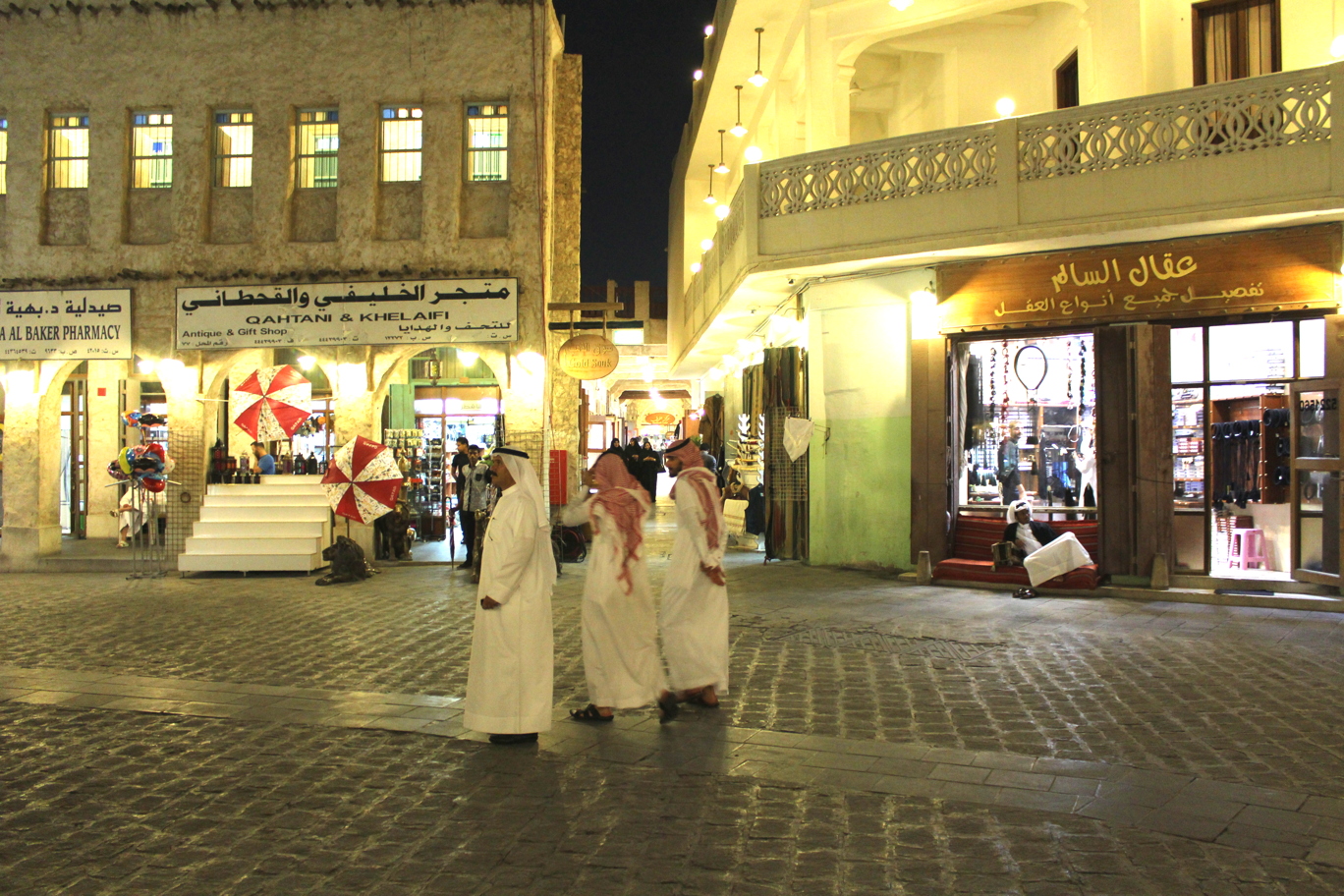
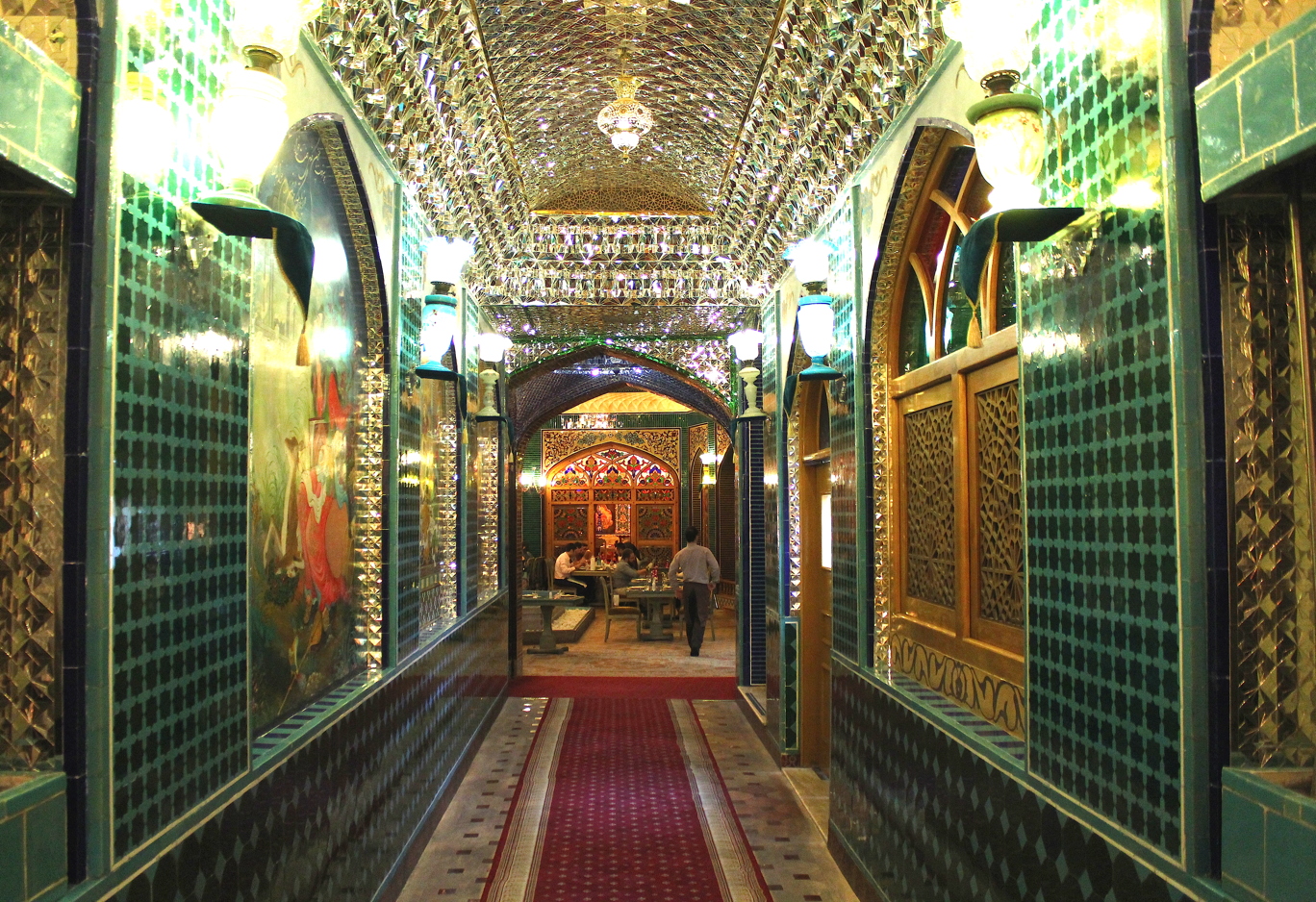 Souq Waqif, it seemed, was where local Qataris, expats and tourists could unite as one community. Its alleyways are rugged and narrow, yet impeccably clean, like an old medina that’s channelling Rodeo Drive.
But amidst Doha’s money, expensive cars and rapid modernization, the city remains proudly traditional at heart.
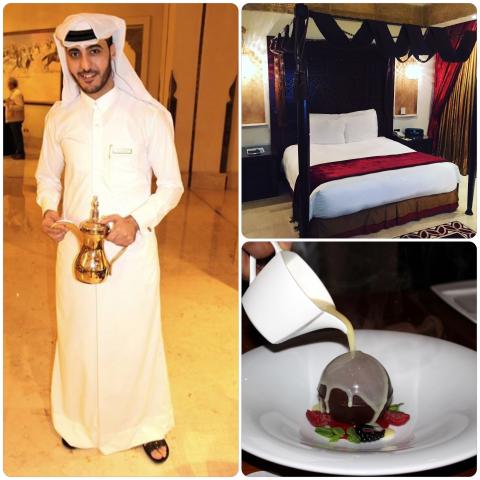
This was evident at Sharq Village, my host hotel, when a male greeter, dressed in a brilliant white Qatari robe, poured me a cup of delicious cardamom-spiced coffee, a local concoction, from a golden Oriental-inspired pot.
 “Qatar is still authentically Middle Eastern,” Hanane Msalek, marketing and communications manager at Sharq Village and Spa, told me over dinner at Al Dana and C Lounge, the resort’s on-site restaurant.
Doha is a marriage of old and new. My suite at Sharq Village, a beachfront resort of villas operated by the Ritz-Carlton, was a blend of authentic Arabian architecture with stunning modern design.
Al Dana restaurant incorporated classic and modern cuisine, too, with Chef de Cuisine Evangelos Liakouris’ beef filet tataki and chocolate balloon dessert scoring high on the mmm-scale.
It’s here, at Al Dana, where I sipped and savoured an Old Fashioned cocktail, knowing well enough it would be difficult to find one elsewhere in town.
Qatar, being a Muslim country with Islam as the state religion, has strict laws surrounding alcohol sales and consumption. Booze cannot be brought into the country, and selling cocktails and martinis is restricted to the major hotels under special licensing.
Local traditions and practices are important to Qataris and visitors are expected to be considerate of the culture. This extends to dress code too – women, in particular, are advised to cover their shoulders, upper arms and knees (although this general rule is more relaxed in hotels or private clubs).
“If you respect the culture, nobody will disturb you,” said Msalek, who moved from Morocco to Qatar to work at Sharq resort. As a woman, she says she feels safe living in Doha (crime, statistically, is low) and respected.
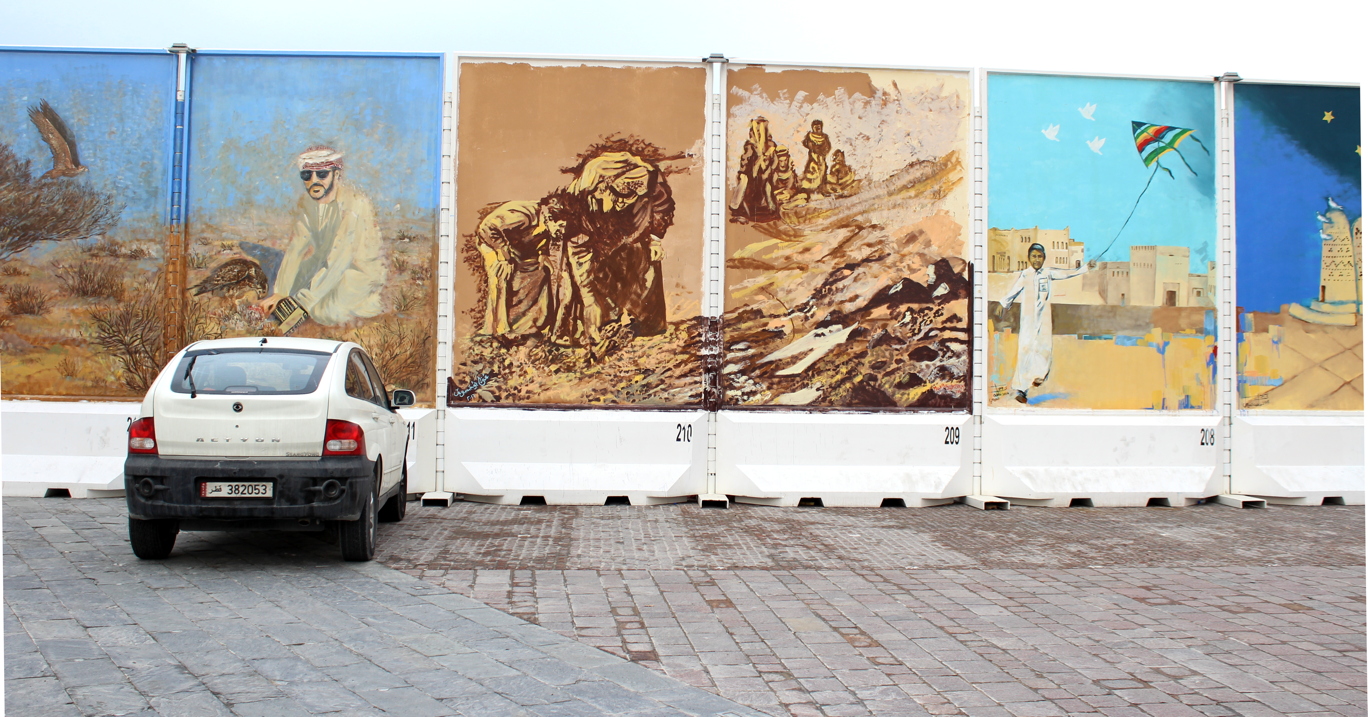
Women in Qatar are allowed to drive cars, vote, run for municipal office and maintain a high rank in social and professional environments.
And dress codes, despite the strict advisories, may not be so black and white.
While walking through Katara Cultural Village, an impressive indoor-outdoor arts centre between West Bay and The Pearl famous for its open amphitheatre and exhibition galleries, I saw a group of older Qatari women dressed in traditional black robes and hijabs (in Louboutin heels, holding Louis Vuitton bags, no less) walking alongside a group of younger women wearing jeans and a t-shirt.
Perhaps change in Qatar is on the horizon? 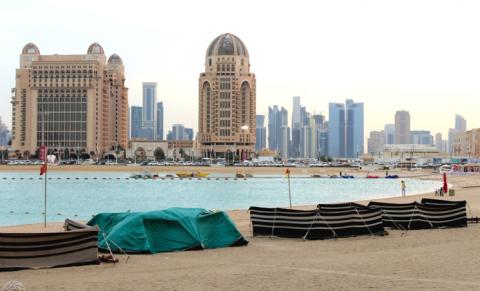
Qatar is an enchanting place, and visiting Doha achieves what travel is supposed to do: it forces you to leave your preconceptions and biases at the airport and expand your understanding of a culture other than your own first-hand.
You’ll realize how little you actually knew about a place.
It may even make a dune basher out of you, too.