We use cookies on our website.
Some of them are necessary for the functioning of the site, but you can decide about others.

It's like something out of the movies: you're flying, when suddenly, you hear, "is there a health professional on the plane?"
Medical emergencies do happen on board, and to get a better idea of how to best manage incidents while flying over the Atlantic, PAX interviewed Sonia Sachdeva, cabin safety and training director at Air Transat.
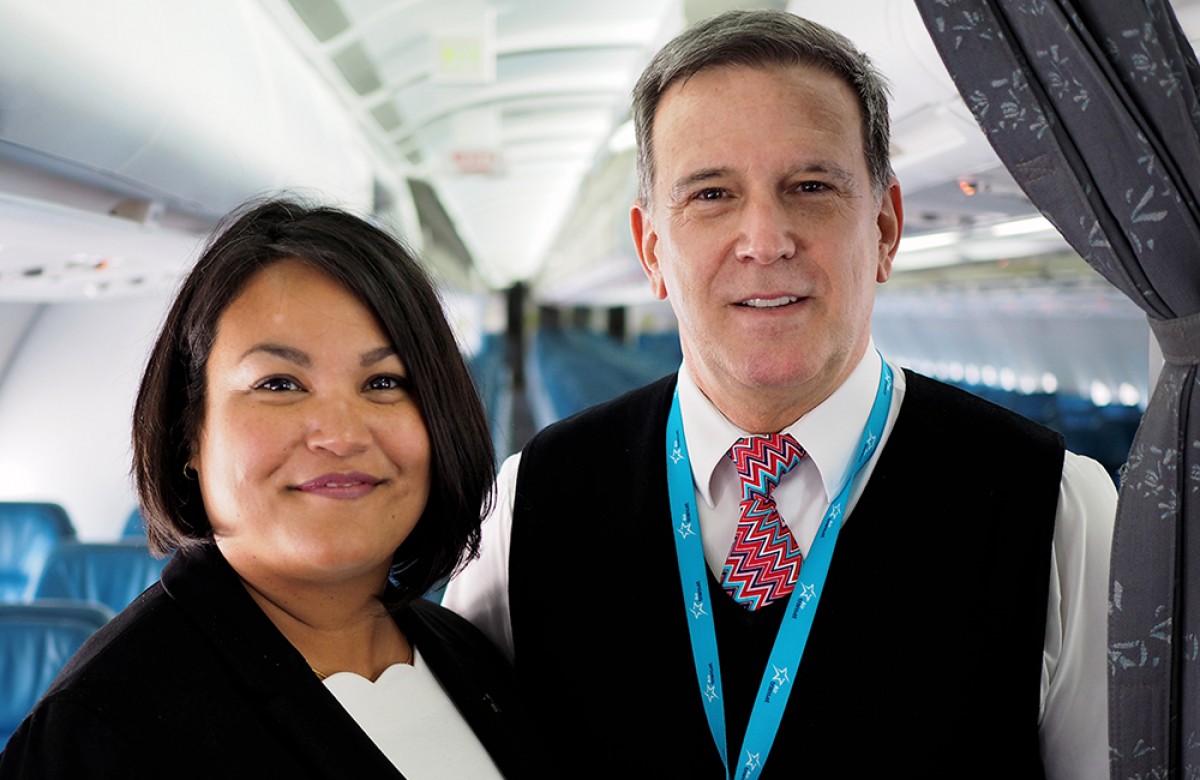 Of Air Transat: Sonia Sachdeva, Director Cabin Safety and Training, and Yves Gagnon, Deputy Flight Director.
READ MORE: A first look at Air Transat's new YYZ check-in counters
"Cabin Managers receive more comprehensive training in leadership and cabin management," Sachdeva said. "But otherwise, agents and leaders have access to the same information for emergency procedures, first aid, cabin safety, even customer service."
It should be noted that these trainings are supervised by various organizations in health and safety.
For example, first aid training is provided by the Heart and Stroke Foundation of Canada; cabin management training is strictly regulated by Transport Canada.
The flight attendants return to school for four weeks to perfect their knowledge of the subject before putting on their uniforms. They will then have to undergo annual continuing education to be medically able to intervene.
"In the case of a serious incident, it's hard to know at first sight that it's serious," Sachdeva said. "We provide first aid and evaluate from there. The cockpit will call Medlink, our ground medicine service, which will help us diagnose the problem. Recently, a child was seriously suffocated on board and thanks to the maneuvers, we were able to revive the individual."
Medlink is a large worldwide organization dedicated to aeronautical medical assistance. They not only have access to a team of general practitioners and specialists, but can also access the technical information of each device including equipment and layout.
Thus, they have a very global vision in case of problems taking into account the 300 some other passengers on board.
However, in the event of death, it is more complex.
"It's not up to the flight attendants to decree a death," Sachdeva said. "We will provide care until a doctor tells us to stop. Sometimes, a passenger travels with a document of the type "Do Not Ressucitate", and it is necessary to validate this information beforehand but it is very, very difficult to confirm it. If in doubt, care will continue."
In Canada, the law of the good Samaritan prevails, and who protects them: thus, a doctor who volunteers in an emergency will not be held responsible for their actions.
Regarding the obligation to intervene, Sachdeva insists that regulations vary from one country to another.
"On-board health care professionals will only be called in if the Passenger Disability has symptoms that go beyond our area of expertise. If necessary, the doctor on board will be able to assist us, always in collaboration with Medlink."
"It is Medlink who will decide the seriousness of the situation and in the end, they will dictate whether it's urgent, depending on the facilities available nearby and the authorizations of local authorities," Sachdeva said. "In the end, it is the commander who will make the decision to change direction or not."
Fortunately, most medical incidents can be absorbed aboard the aircraft by the cabin crew and the volunteer health professionals.
The last serious incident that was reported on board a Transat aircraft dates back more than six months.
On all Transat devices, there is a defibrillator, first aid medical kits with prescription drugs, even intravenous drugs, and some tools such as the blood pressure monitor and the blood glucose meter.
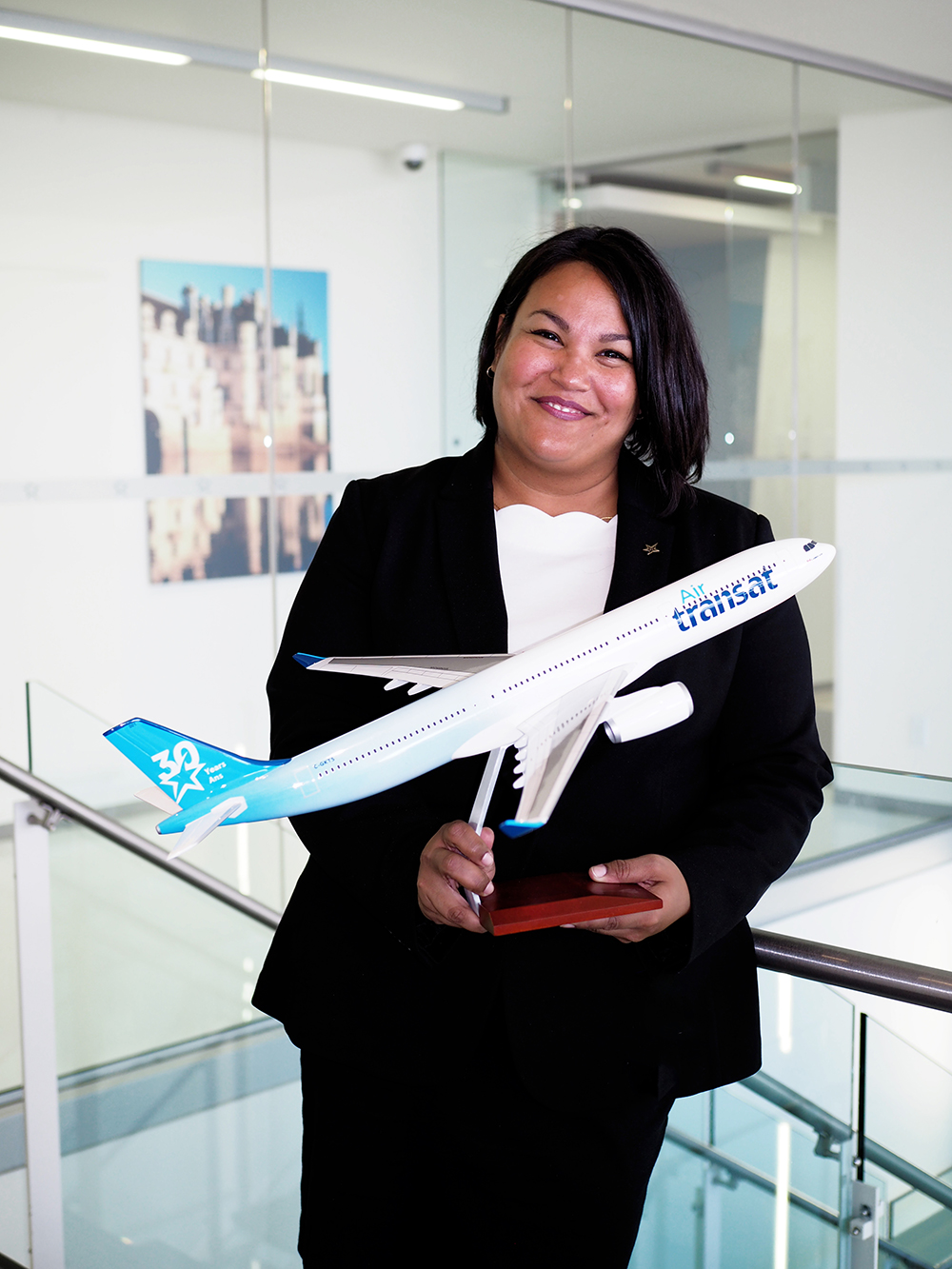
Namely, the type of situation that occurs most often, Sachdeva said that it is mainly the first symptoms of minor illness.
As Sachdeva explained, the most common types of malaise all circle back to common everyday disrupters like lack of sleep, or unbalanced eating habits a few days prior.
"The passengers are excited to be traveling, and that's normal!" Sachdeva said. "They sometimes forget to hydrate or eat well. They are thirsty and hungry, often in addition to being tired and stressed by departure. On this we are all the same!"


