We use cookies on our website.
Some of them are necessary for the functioning of the site, but you can decide about others.
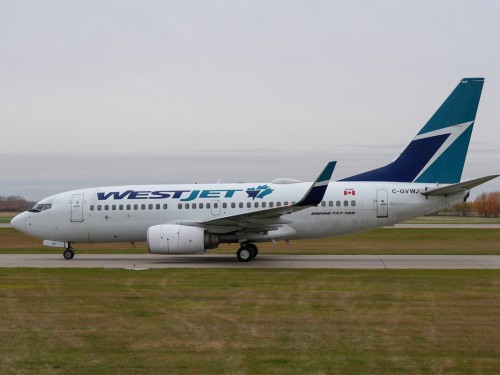
 The sun had barely risen over the horizon when our Transat plane landed at Athens airport. Jetlagged but nonetheless rested thanks to a peaceful night's sleep in the Club class, I smiled upon feeling the warm breeze on my cheeks - a welcome respite from the rapidly decreasing temperatures back home. Welcome to Greece, I thought.
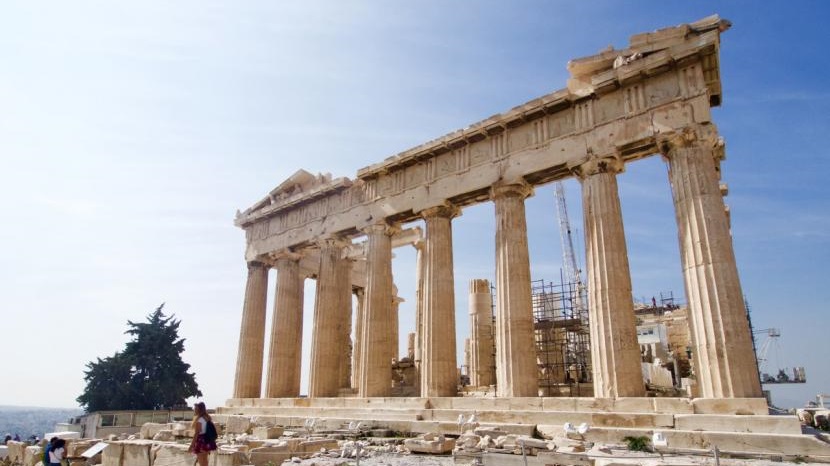
The first stop on the itinerary was, of course, the Acropolis and its captivating museum. One does not go to Athens and skip this compulsory visit, which was further enriched by the various mythological stories of our well-versed guide. Quite fittingly, we had lunch in one of the many family-owned taverns in Plaka, nicknamed the “Neighbourhood of the Gods” because of its proximity to the site. After a quick visit of the first modern Olympic Games Stadium and an entertaining stop at the Changing of the Guard, we wrapped our time in Athens by watching the sun set over the Acropolis on the rooftop of the Royal Olympic Hotel. Morpheus quickly came calling but no one dared complain, as we were just a few hours from finally visiting picturesque Mykonos.
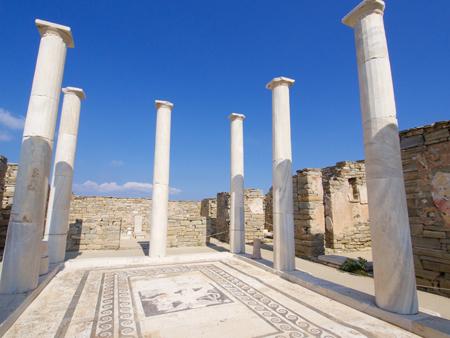
Where Athens was noisy and lively, chaotic even, this island was the exact opposite. The maze-like streets of the main town were calm and peaceful - one of the many advantages of visiting post-cruise season. It makes it almost difficult to believe that Mykonos is the party capital of the Cyclades come summertime! From my bougainvillea-adorned balcony at the Royal Myconian Hotel (one of the nicest resorts available with Transat), I admire the emerald-turquoise water of the Aegean Sea in which I dipped my toes, simply to tick the experience off my proverbial bucket list. In the distance I catch a glimpse of Delos which we visited earlier that day; birthplace of Apollo, it's the largest archeological site of the Mediterranean Basin. Once a prosperous port city, the island was home to 25,000 inhabitants and benefited from a highly lucrative spiritual tourism industry that drew in thousands pilgrims of all religious confessions in need of purification.
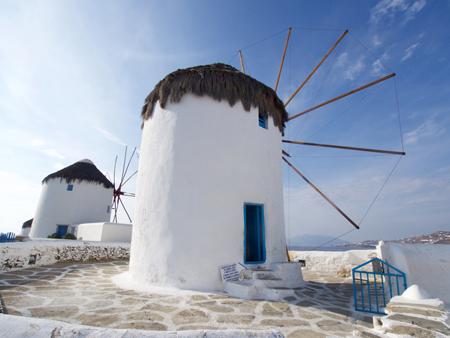
The next morning saw us take to the sea, with Santorini as our next port of call. The main town, Oia, is essentially a living Greek cliché: timeworn windmills, quintessential Greek chapels with cerulean domes and steep cliffs covered in pastel-coloured houses at angles that seem to defy gravity.
 I’m glad to have seen these iconic sights, if only for the sake of it, but Oia failed to deliver the depth and character I expected from it. Other parts of Santorini proved to be more stimulating, like the village of Pyrgos, the vastly underrated Bronze Age archeological site of Akrotiri, and the surprising harvest techniques of local wineries.
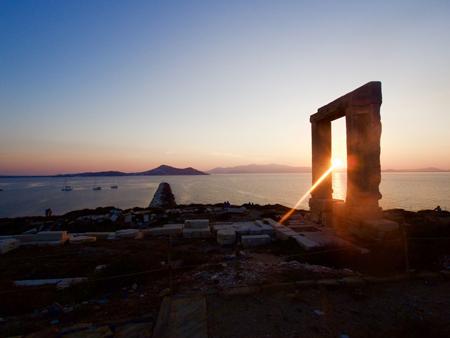
Naxos, the fourth island on our programme, is the only place where I truly felt immerged in Greek culture. The largest island in the Cyclades boasts an undeniable charm and authenticity that has yet to be tarnished by mass tourism. The port of Naxos is flanked, on the left, by a small peninsula topped with the towering arch of Apollo’s Temple, which almost looks like an invitation to time-travel back to antiquity. On the right is a vast and fertile mountain range whose valleys conceal white-washed villages that have, for all intents and purposes, remained exactly the same for the past 200 years.
And to me, that’s what Greece is about: a land of jaw-dropping landscapes, deeply steeped in tradition and mythology, with an unparalleled sense of hospitality. Efcharistó Greece. I’ll see you again soon!