We use cookies on our website.
Some of them are necessary for the functioning of the site, but you can decide about others.

Michael Pihach is an award-winning journalist with a keen interest in digital storytelling. In addition to PAX, Michael has also written for CBC Life, Ryerson University Magazine, IN Magazine, and DailyXtra.ca. Michael joins PAX after years of working at popular Canadian television shows, such as Steven and Chris, The Goods and The Marilyn Denis Show.
Major Canadian airlines are calling on Ottawa to implement “shared accountability'' in aviation, with the goal of furthering smoother travel and network-wide responsibility for flight disruptions.
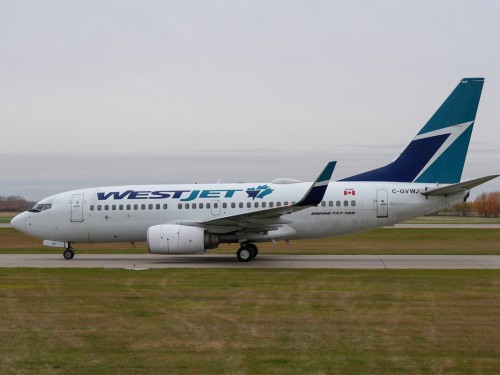
The National Airlines Council of Canada (NACC), which represents Air Canada, Air Transat, Jazz Aviation LP and WestJet, on Thursday (May 11) released a report presenting actions that could improve the air passenger experience.
The suggestion come three weeks after the House of Commons tabled legislation to overhaul and enhance passenger rights, and five days before a Senate committee hearing on the bill.
Prepared in collaboration with the law firm YYZLaw, the report, entitled “Enhanced Accountability, Shared Responsibility and Services Standards in Canada’s Air Travel Ecosystem,” offers recommendations to the Government of Canada to help achieve its goal of improving air travel and transparency for travellers.
READ MORE: Proposed passenger rights overhaul “will not improve” air travel, says NACC
Post-pandemic travel turbulence, from last summer to this past winter, prompted the Liberal government to announce changes to Canada’s Air Passenger Protection Regulations (APPR) in an effort to close compensation loopholes and beef up penalties.
“Both the Minister of Transport and the House of Commons Standing Committee on Transport, Infrastructure and Communities recently endorsed the concept of shared accountability and we share this view,” stated Jeff Morrison, president and CEO of NACC, in a press release.
“The recommendations in this report come at an opportune time, and we look forward to ensuring that a national shared accountability framework is implemented.”
The report contains several recommendations, including:
“Canadians have made clear to the federal government that they expect a more reliable and transparent air travel experience. Implementing a shared accountability framework is a necessary step to achieve that,” stated Morrison. “As the federal government continues to pursue efforts to strengthen the overall air travel system, NACC calls on the federal government to incorporate the findings of this report into future reforms.”
The full report can be read here.
If changes to the APPR pass, the proposed amendments will put the onus on airlines to show a flight disruption is caused by safety concerns or reasons outside their control, with specific examples to be drawn up by the CTA as a list of exceptions around compensation.
READ MORE: Air passenger rights changes put burden of proof on airlines, not travellers, says Ottawa
In other words, the burden of proof will be put on airlines – not passengers.
Last month, the NACC took issue with the proposed changes, warning that the bill's potential scrapping of safety concerns as an exception to compensation requirements could impact customer safety.
“Safety will always be the primary consideration for Canadian airlines,” the NACC said at the time. “Although revised safety parameters under the APPRs will be determined through a regulatory process, no airline should be penalized for adhering to the highest standards of safety, whether that is due to weather, mechanical issues, or other safety-related constraints.”
Don't miss a single travel story: subscribe to PAX today! Click here to follow PAX on Facebook.