We use cookies on our website.
Some of them are necessary for the functioning of the site, but you can decide about others.


Michael Pihach is an award-winning journalist with a keen interest in digital storytelling. In addition to PAX, Michael has also written for CBC Life, Ryerson University Magazine, IN Magazine, and DailyXtra.ca. Michael joins PAX after years of working at popular Canadian television shows, such as Steven and Chris, The Goods and The Marilyn Denis Show.
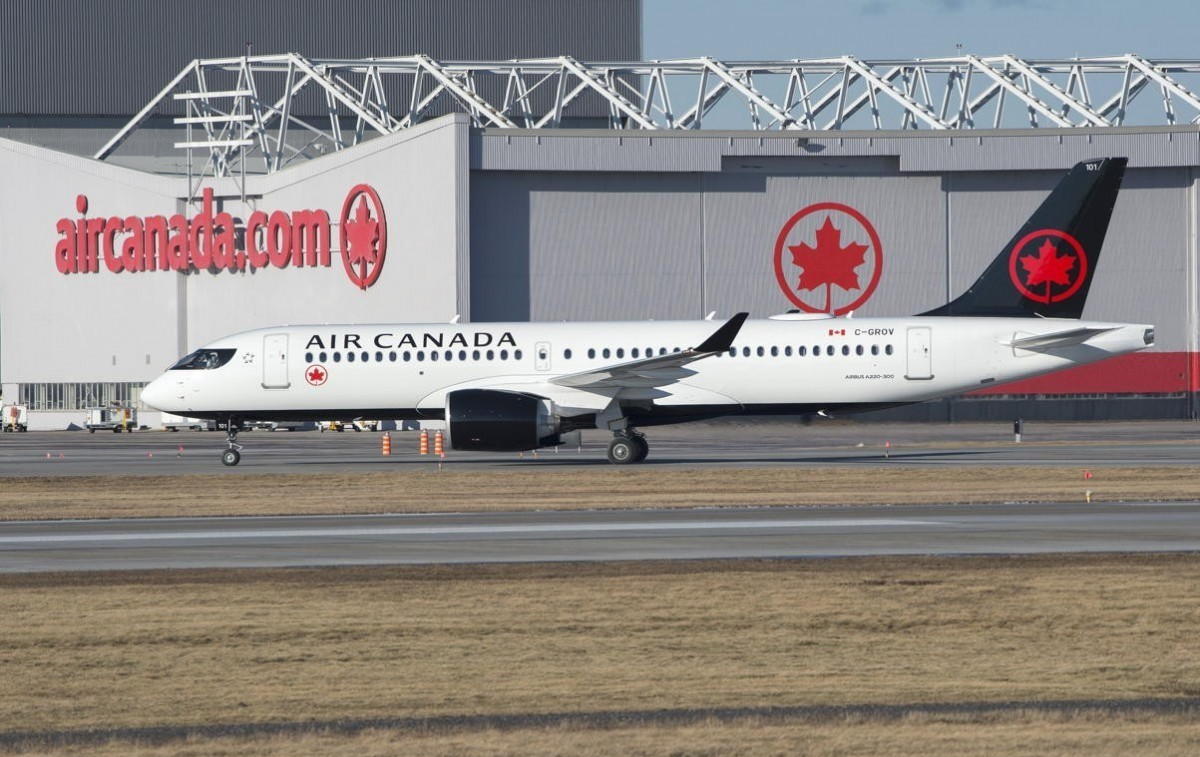
Air Canada is reporting “record” passenger and operating revenues for its fourth quarter, surpassing results from a year ago and those of the fourth quarter of 2019.
“This was due to solid demand and yield environments across our network,” Michael Rousseau, president and CEO of Air Canada, said in a 2022 earnings report issued early Friday (Feb. 17).
Rousseau attributed Air Canada’s performance to the “deep resilience we have built into our company for long-term stability.”
“We reported positive cash flows from operations in the fourth quarter of $647 million and positive free cash flow of $320 million,” said the CEO. “We exercised diligent cost control.”
Air Canada ended 2022 with total liquidity of more than $9.8 billion.
While Canada’s largest airline posted a $1.7-billion loss for that year, there have been improvements as the aviation sector nears three years since the COVID-19 pandemic began.
Air Canada’s loss of $4.75 a share is better than 2021, when the carrier lost $3.6-billion, or $10.25 a share.
Revenue from seat sales in 2022 more than tripled from 2021 to $14.2-billion, Air Canada reported, which represents about 83 per cent of 2019's pre-COVID levels.
The airline's 2022 net loss included a foreign exchange loss of $732 million.
Mr. Rousseau said the results “validate our strategy of diversifying our revenue sources.”
In Air Canada’s passenger business, revenue was about two per cent higher than in the fourth quarter of 2019, he said.
Revenue from premium cabins was about 13 per cent higher, which was supported in part by the Aeroplan loyalty program, he added.
Aeroplan’s membership is at “an all-time high and continues to grow,” Mr. Rousseau said, adding that Air Canada Cargo revenue was up 55 per cent compared to the same quarter pre-pandemic.
Similarly, Air Canada Vacations ground package revenues contributed to growth in other revenues of $62 million, or 23 per cent higher than the fourth quarter of 2019, said Rousseau.
For the three months ending Dec. 31, which included the not-so-smooth holiday travel season, Air Canada reported a profit of $168-million, compared to a loss of $493-million in the fourth quarter of 2021.
In 2020, the year the COVID-19 pandemic was declared, Air Canada’s loss amounted to $4.6-billion, compared to a profit in the previous year of $1.5-billion.
But Air Canada’s CEO is “very encouraged” by the positive outlook ahead.
As quarterly ticket sales were 102 per cent of the fourth quarter of 2019, on a lower level of capacity, “we expect a solid demand environment in 2023,” Mr. Rousseau stated.
“In anticipation, we are building out our global network, continuing our narrow-body fleet renewal, and investing in technology and customer service,” he said. “More than 36 million people chose to fly with Air Canada last year. We appreciate and thank them for their loyalty.”
“We intend to do much more to provide them with an elevated level of customer service and continuous value from our airline in 2023 and beyond."
Don't miss a single travel story: subscribe to PAX today! Click here to follow PAX on Facebook.